AI for Business Presentations
AI tools are making waves in how business presentations are created and delivered, especially when it comes to Hebrew communication.
Live Slide Translation
AI-powered tools now offer real-time translation of presentation slides between English and Hebrew. This is a game-changer for international meetings, ensuring content is accessible to diverse audiences. These tools handle both right-to-left Hebrew and left-to-right English seamlessly, all while keeping the original design intact, recognizing industry-specific terms, and updating content dynamically.
| Feature |
Impact on Presentations |
| Right-to-Left Support |
Accommodates Hebrew alongside English seamlessly |
| Format Preservation |
Keeps slide designs intact during translation |
| Technical Term Recognition |
Accurately translates specialized terminology |
| Real-time Updates |
Enables live content adjustments during presentations |
This functionality ensures presenters can deliver visually polished and linguistically accurate slides, even in high-pressure settings.
Hebrew Speech Guidance
AI doesn’t just stop at slides. It also helps with spoken Hebrew delivery, offering real-time pronunciation tips to boost confidence. The system adjusts based on the context, helping speakers tailor their language to the audience’s background and the formality of the event.
Multi-Language Caption Support
For those juggling multiple languages, AI-driven caption systems provide simultaneous Hebrew-English subtitles. These captions include speaker identification, ensure technical terms are translated correctly, and adapt to cultural nuances. This makes it easier to convey complex business ideas clearly and professionally, no matter the audience.
Want to explore these smart Hebrew translation features? Visit www.itsbaba.com.
sbb-itb-7e51dcc
AI for Business Negotiations
AI is changing the way Hebrew business negotiations are conducted by enabling clear and instant communication.
Live Speech Translation
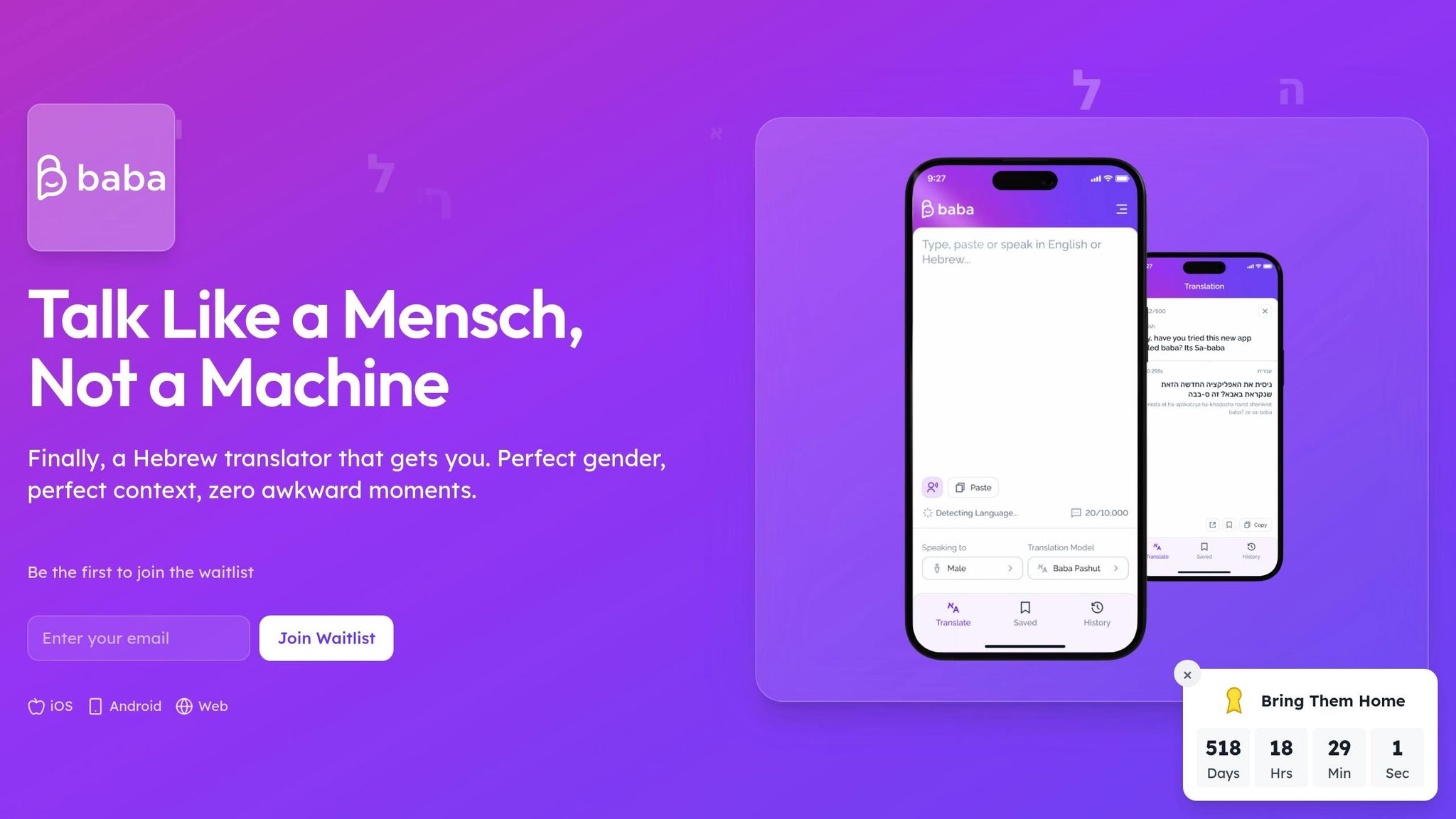
Advanced AI tools now offer real-time Hebrew speech translation during meetings. These systems can instantly convert spoken Hebrew into text or other languages while keeping important details intact. For instance, baba ensures Hebrew's nuances, including gender-specific language, are accurately reflected.
| Translation Feature |
Business Impact |
| Real-time Processing |
Allows for quick, on-the-spot responses |
| Context Preservation |
Ensures industry-specific terms stay precise |
| Cultural Adaptation |
Adjusts tone and formality to fit the setting |
This capability helps ensure the tone and intent remain consistent throughout the negotiation process.
Tone Analysis
AI-powered tools can evaluate speech patterns to help maintain a professional tone and the right level of formality during discussions.
Context Recognition
Beyond translation and tone management, AI systems are designed to understand contextual nuances. They adapt to specific industry jargon, the stage of the meeting, and cultural expectations to ensure communication remains effective and appropriate.
baba's context-aware features provide reliable support for emails, presentations, and negotiations. Want to elevate your Hebrew business negotiations with AI? Head to www.itsbaba.com to join the waitlist for their mobile app.
To navigate the complexities of Hebrew communication, selecting the right AI tools is essential. These tools should address Hebrew-specific challenges like right-to-left (RTL) text direction and gender-specific language usage.
When picking AI tools for Hebrew, prioritize features that cater to its unique traits. Here's a quick breakdown of key features to consider:
| Feature |
Priority |
Why It Matters |
| RTL Support |
Critical |
Ensures proper text alignment and readability |
| Gender Recognition |
High |
Keeps communication culturally appropriate |
| Integration Options |
Medium |
Ensures smooth compatibility with your systems |
| Real-time Processing |
High |
Enables instant translations in meetings |
For example, baba stands out with its ability to handle cultural nuances and gender-specific translations with precision.
Connecting with Current Systems
Before rolling out an AI solution, verify that it works seamlessly with your existing systems. Use this checklist to guide the integration process:
- API Compatibility: Confirm the tool's API works with your communication platforms.
- Data Security: Check that encryption protocols meet your organization's standards.
- Performance Testing: Conduct parallel tests to identify any issues before full deployment.
Once the system is integrated, ensure your team is equipped to use it effectively.
Staff Training Guide
Your team needs training not only on the tool's technical aspects but also on how to apply it in culturally sensitive ways. Focus on these key areas:
- Daily Tasks: Teach the basics, like composing emails, translating documents, using gender selection features, and adjusting formality levels.
- Advanced Features: Train staff to use context-specific translation tools and navigate cultural sensitivities in communication.
- Best Practices: Establish guidelines for reviewing AI-generated translations, especially for important communications, and emphasize understanding Hebrew business culture.
With the right tools and training, your team will be well-prepared to maintain high standards in Hebrew communication.
Next Steps
Let’s dive into practical tools and benefits that can help you improve your Hebrew communication strategies.
AI tools tackle the unique hurdles of Hebrew, making it easier to achieve accurate gender usage, reflect cultural subtleties, and integrate seamlessly with existing systems. These improvements can strengthen professional relationships, negotiations, and workflows in Hebrew-speaking markets. Interested? Start exploring solutions tailored for these needs.
Try baba Translation
baba is designed to simplify Hebrew communication by addressing the challenges outlined earlier. Here's what it offers:
- Smart Gender Detection: Automatically applies the correct gender forms.
- Context-Aware Translations: Produces formal and culturally refined translations.
- Professional Integration: Syncs with popular business platforms to ensure consistent messaging.
Want to take your Hebrew communication to the next level? Join the waitlist for baba's mobile app at www.itsbaba.com.
Frequently Asked Questions
Why does Hebrew grammar make business translation so much harder than other languages?
Hebrew assigns grammatical gender to verbs, adjectives, and pronouns, so a single mistranslated form can make an email sound unprofessional or even disrespectful to the recipient. Generic tools that ignore gender context produce output that immediately signals a non-native writer, which matters a lot in Israeli business culture where relationship tone carries real weight.
Can AI translation tools handle Israeli business slang and informal register, not just formal Hebrew?
Yes, context-aware tools can distinguish between formal boardroom Hebrew and the more casual, direct style common in Israel's tech and startup scene. The key is choosing a platform built around Hebrew-specific training rather than one that layers Hebrew on top of a general-purpose engine, since slang and register shifts are where literal tools fall apart fastest.
What should I actually check before rolling out a Hebrew AI tool for my team?
Beyond feature lists, verify that the tool supports right-to-left text rendering across your existing platforms, that its API integrates cleanly with your email or CMS setup, and that it handles gender selection for different recipient contexts. Running parallel translation tests on real business emails before full deployment is the fastest way to catch gaps.
How do AI tools help during live Hebrew negotiations, not just written communication?
Real-time speech translation systems can convert spoken Hebrew on the fly while preserving tone, formality level, and industry-specific terms that would get flattened by a literal word-for-word approach. This is especially useful in fast-moving deal discussions where waiting for a human interpreter or re-reading a translation would break the flow of conversation.
Do I need separate tools for different tasks like email, presentations, and live meetings?
Not necessarily—platforms that offer context-aware translation can adapt the same underlying engine to formal email drafting, slide content, and conversational speech by reading situational cues. The practical advantage is consistent terminology and tone across all your Hebrew touchpoints, rather than managing multiple disconnected tools that may contradict each other.