Reducing Errors in Hebrew AI Translation
Hebrew AI translation is tough. Why? The language's unique grammar, gender rules, and idioms often confuse AI systems, leading to errors. Here's what you need to know:
-
Key Issues in Hebrew AI Translation:
- Gender and Number Errors: Hebrew requires nouns, verbs, and adjectives to match in gender and number (e.g., "אני שמח" vs. "אני שמחה").
- Word Order Problems: Hebrew's flexible sentence structure can confuse AI, leading to awkward or incorrect translations.
- Idioms Misinterpreted: Hebrew idioms like "על הפנים" (literally "on the face", meaning "terrible") often lose their meaning in translation.
- Why It Matters: Poor translations can harm business deals, legal documents, or even everyday communication. They can also damage trust and reputation.
-
How to Fix It:
- Better AI Models: Advanced systems analyze grammar and context more effectively.
- Native Speaker Input: Human experts help catch errors and refine translations.
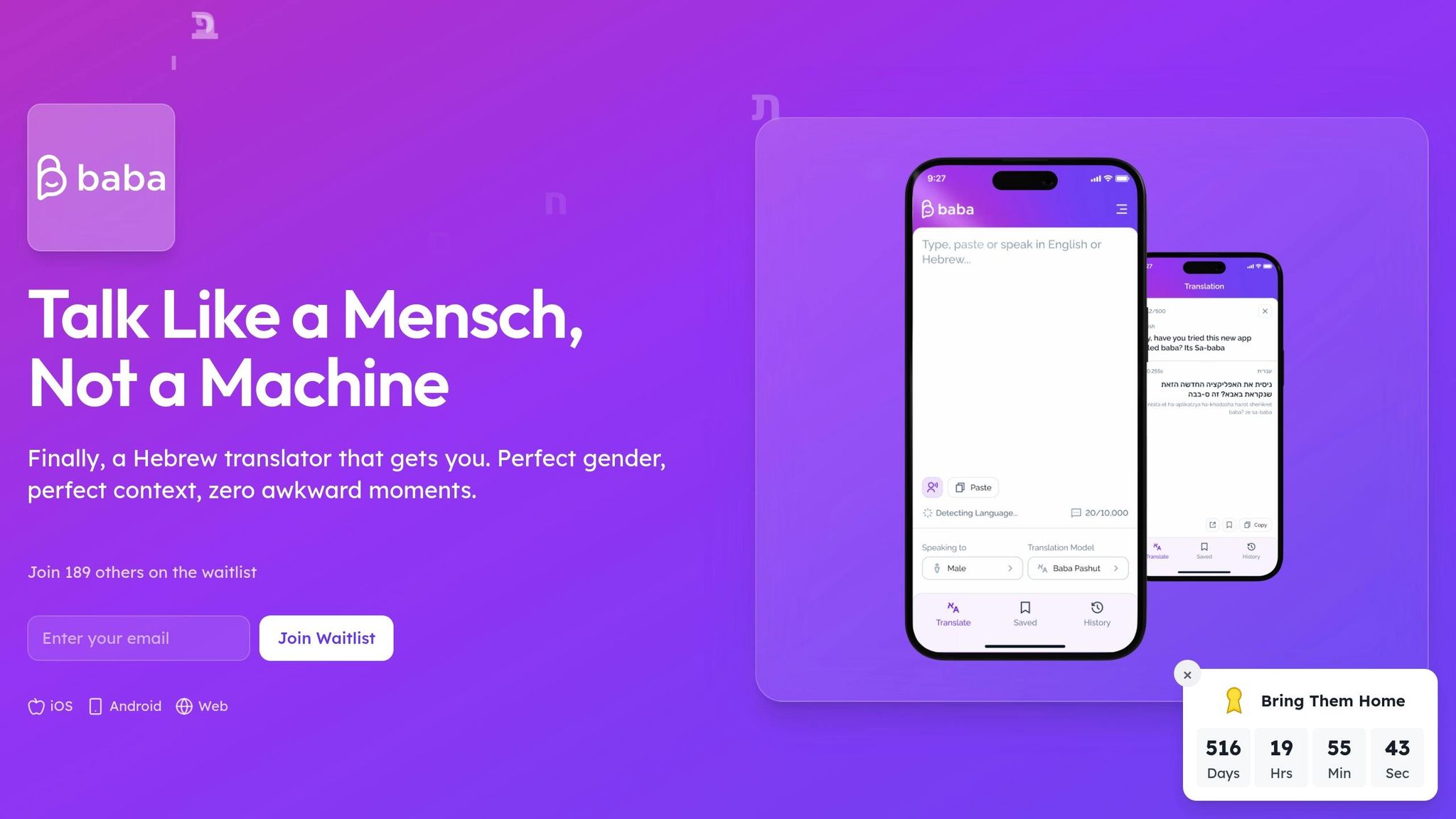
- Specialized Tools: Tools like baba - Smart Hebrew Translation address Hebrew's unique challenges, such as gender detection and idiomatic expressions.
Takeaway: Hebrew AI translation requires a mix of advanced technology and human expertise to reduce errors and ensure accuracy.
How To Use ChatGPT As A Hebrew Translator
Main Translation Errors
When it comes to translating Hebrew, AI tools often stumble due to the language's unique structure and the complexity of interpreting it accurately. These challenges lead to some major translation mistakes.
Gender and Number Mistakes
Hebrew's grammar requires that every noun, verb, and adjective match in both gender and number. This makes translation tricky for AI systems. For example, translating "I am happy" depends on the speaker’s gender, requiring either "אני שמח" (ani sameach, masculine) or "אני שמחה" (ani smecha, feminine).
Common missteps include:
- Adjectives that don’t match the gender or number of their corresponding nouns
- Incorrect verb forms based on the subject's gender
- Misalignment of gender-neutral terms with Hebrew's strict gender rules
These errors can distort the meaning of even simple sentences.
Word Order Problems
Hebrew allows for a flexible sentence structure, unlike English's more rigid Subject-Verb-Object format. While this flexibility feels natural to native speakers, it often confuses AI systems, which are usually trained with English as a base.
Typical issues include:
- Misplacing adjectives in relation to the nouns they describe
- Errors in possessive phrases (known as סמיכות, smichut)
- Misunderstanding emphasis created by varying word order
These structural misinterpretations can make sentences sound awkward or change their meaning entirely.
Idiom Translation Errors
Hebrew idioms are another major stumbling block for AI. Idioms carry meanings that go far beyond their literal translations, and this cultural nuance is often lost. For instance, the phrase "על הפנים" (al ha-panim) literally means "on the face", but in context, it conveys "terrible" or "very bad."
When idioms are mistranslated, the results can include:
- Loss of cultural significance
- Confusion in professional or business communication
- Misinterpretations in formal documents
Such errors can seriously impact the clarity and intent of a translation, especially in settings where precision is non-negotiable. The real challenge lies in capturing the meaning behind the words, not just their direct translation.