Gender in Hebrew AI: Key Challenges
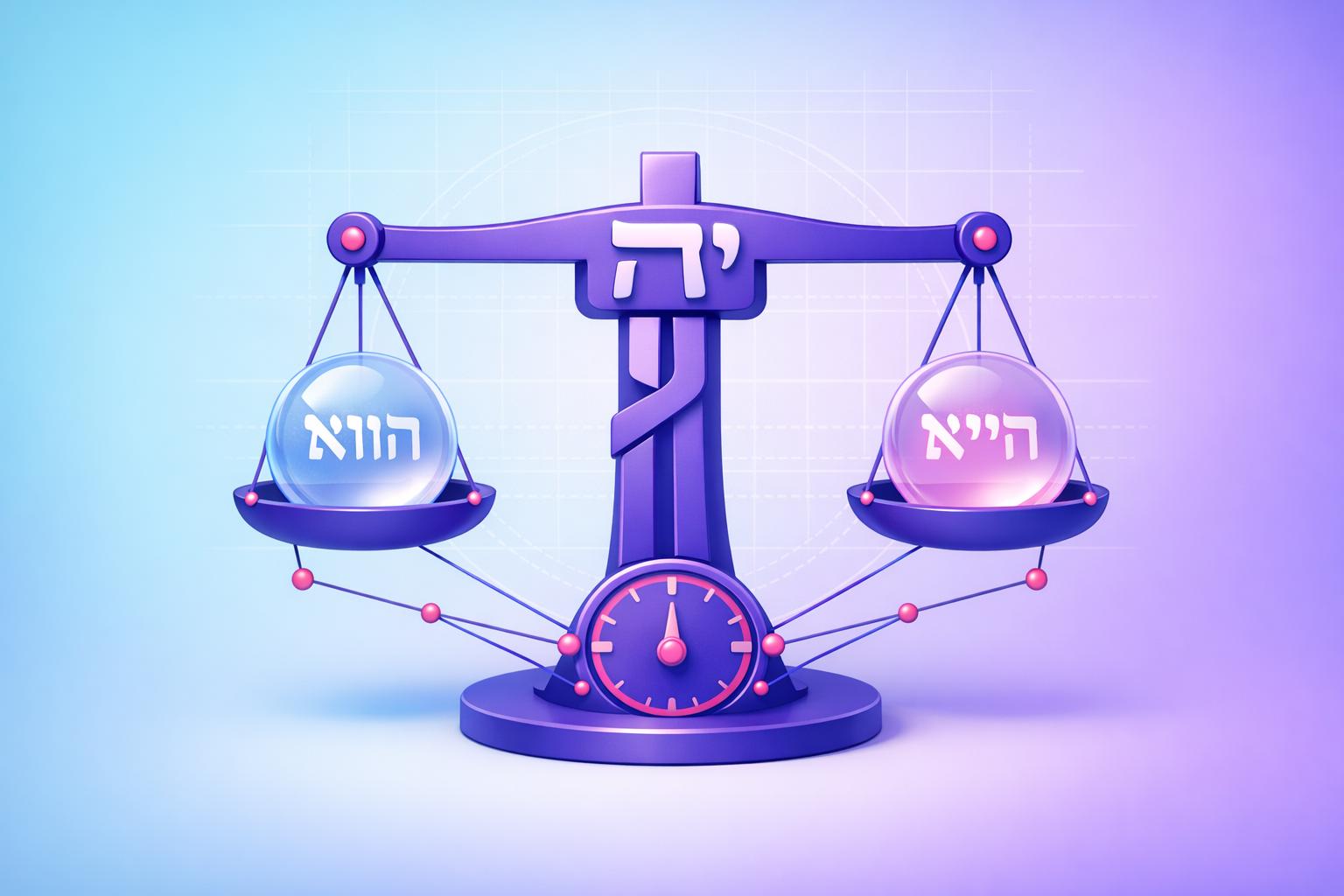
Hebrew AI faces unique challenges due to gendered grammar rules. Unlike English, Hebrew requires gender agreement across verbs, adjectives, and even numbers. For example, "I am happy" translates to "אני שמח" (ani same'ach) for males and "אני שמחה" (ani sme'cha) for females. Modern Hebrew also incorporates gender-neutral expressions, adding further complexity.
Key Points:
- Gender Agreement: Hebrew sentences must align with the speaker's gender.
- Context Sensitivity: AI must adapt to formal/informal settings and cultural norms.
- Non-Binary Support: Modern Hebrew includes inclusive language options.
- Challenges: Detecting implied gender and managing group conversations.
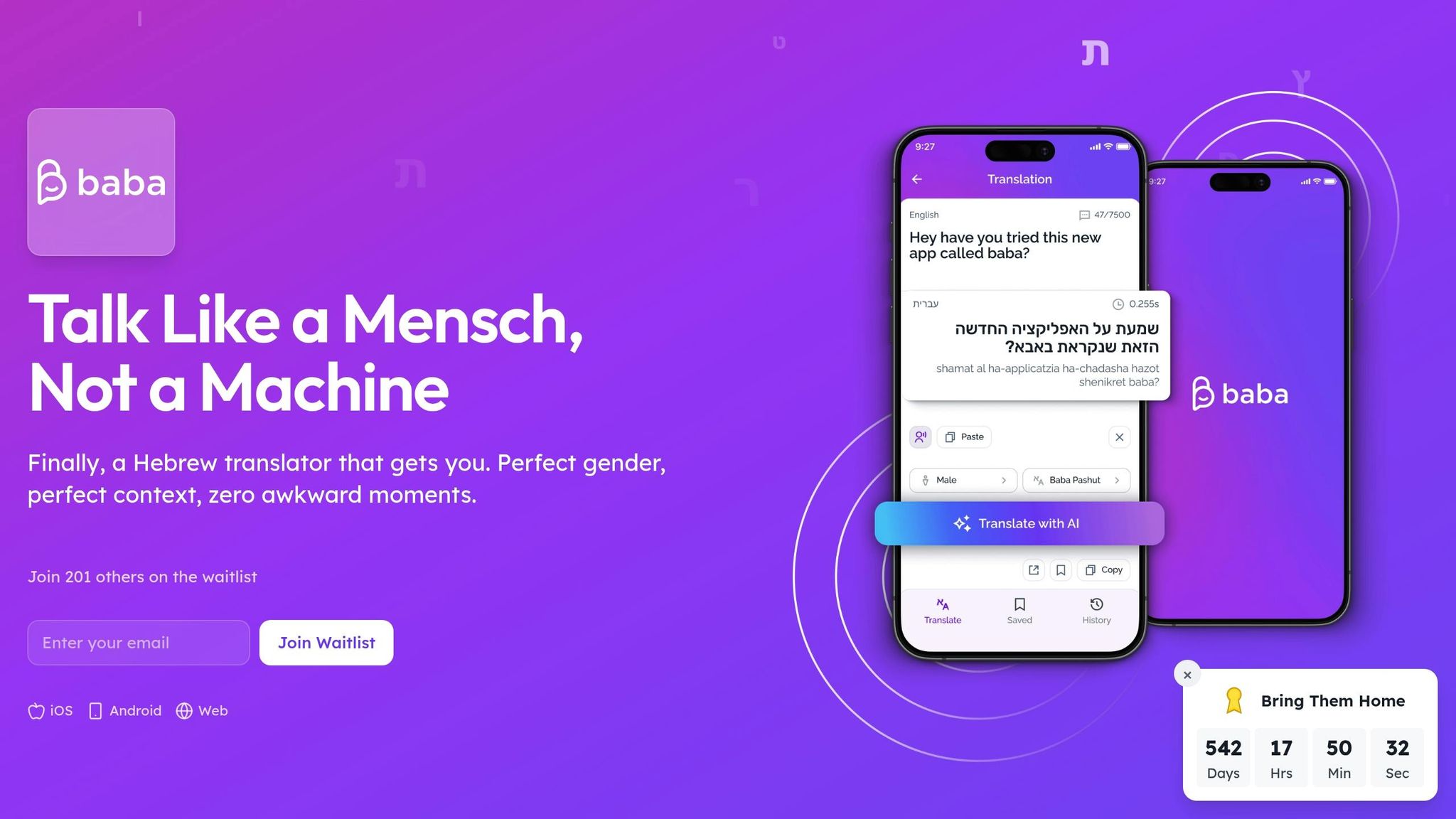
baba - Smart Hebrew Translation addresses these issues with context-aware AI that ensures accurate, gender-consistent translations. It supports non-binary expressions and adjusts language for professional and casual settings. However, it still faces challenges in complex sentences and fast-paced scenarios.
Want to learn more? Visit www.itsbaba.com.
1. baba - Smart Hebrew Translation
Gender Detection Systems
baba tackles the unique challenges of Hebrew grammar by addressing gender-specific language rules. It identifies the gender of both the speaker and the recipient using a mix of contextual analysis and user input. This ensures translations stay grammatically correct, whether you're in a business meeting or having a casual conversation.
Key features of baba's gender detection include:
- Real-time adjustments for verbs, adjectives, and pronouns
- Consistent adjective agreement tailored to the conversation
These tools work alongside baba's broader focus on understanding context.
Context Recognition
Understanding context is at the heart of baba's gender-aware translation system. The platform evaluates multiple factors to produce translations that fit the situation:
- Whether the communication is formal or informal
- Workplace-specific language needs
- Cultural subtleties important to Hebrew speakers
- Time-related context, such as verb tense and gender alignment
For business communications, baba fine-tunes translations to match professional norms, ensuring presentations and negotiations are both accurate and appropriately polished.
In addition, baba reflects modern language trends by accommodating non-binary expressions.
Non-Binary Language Support
baba recognizes the changing landscape of Hebrew and includes options for non-binary language. This helps users embrace inclusive communication by:
- Offering gender-neutral options for different scenarios
- Supporting modern Hebrew expressions that are inclusive
- Allowing flexibility in how gender is expressed
- Maintaining grammatical correctness while respecting individual identities
This approach helps users stay true to their style of communication while meeting the demands of Hebrew grammar. It bridges the gap between traditional language rules and the needs of modern, inclusive expression.
Sign up for the mobile app waitlist at www.itsbaba.com