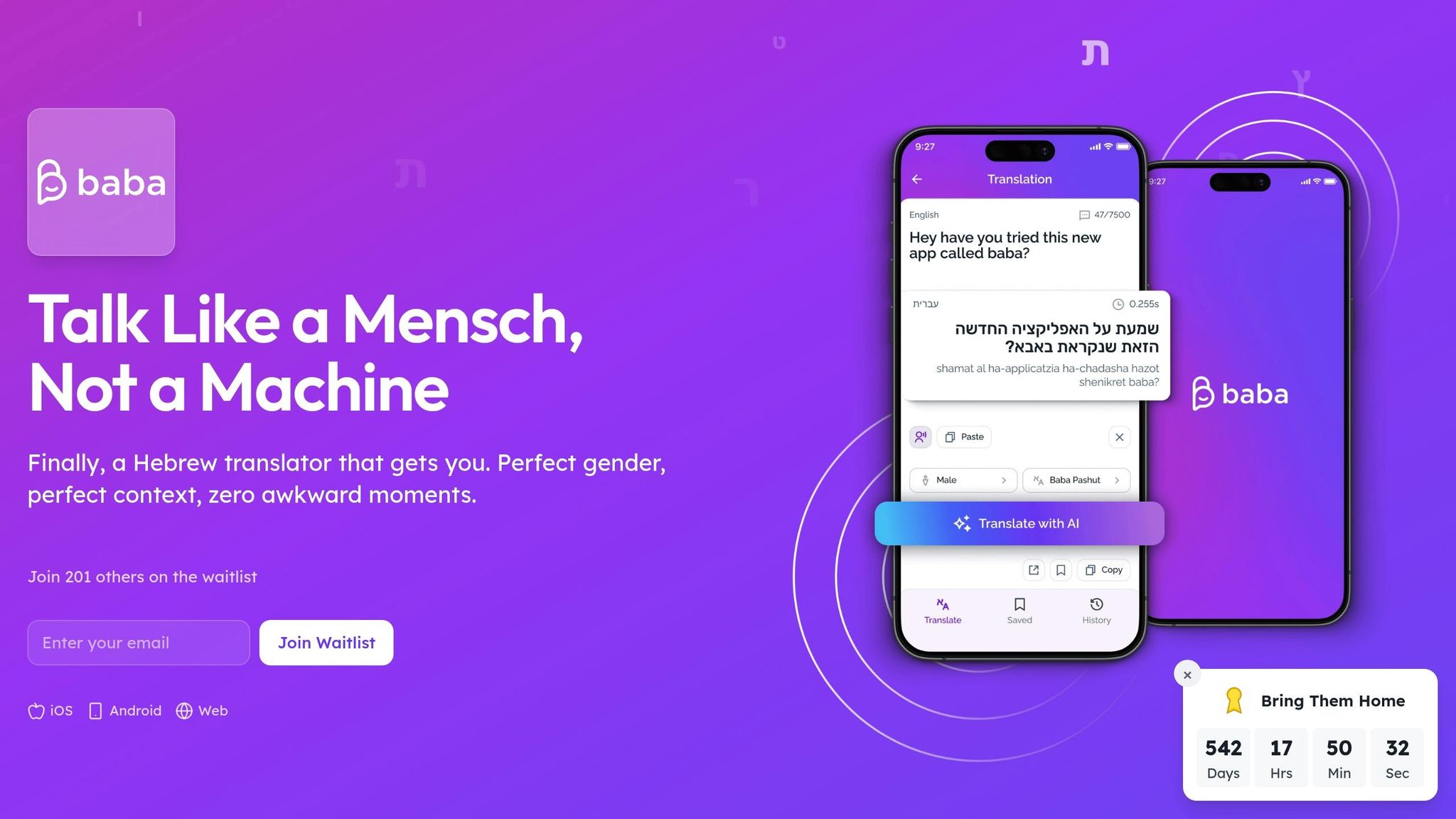
Speech Recognition in Multilingual Hebrew Classrooms
Speech recognition technology is transforming how Hebrew is taught in multilingual classrooms. It provides instant feedback on pronunciation, adjusts to various accents, and helps students from different linguistic backgrounds learn effectively. Here's how it helps:
- Real-Time Feedback: Tools like baba analyze speech patterns and offer corrections for tricky Hebrew sounds like ח (chet) and ע (ayin).
- Personalized Learning: Tailored lessons address individual challenges based on native language and accent.
- Interactive Practice: AI-powered conversation exercises prepare students for real-life interactions.
- Teacher Support: Detailed progress data helps educators track student improvements and adjust lessons.
Want to improve Hebrew learning? Join the waitlist for the baba app at www.itsbaba.com.
Better Hebrew Pronunciation With AI & YouTube
Speech Recognition Tools for Hebrew Study
Speech recognition technology is making Hebrew instruction more effective, especially in classrooms with students from diverse linguistic backgrounds. These tools help handle different accents and learning approaches while offering unbiased feedback. This creates a solid base for more advanced speech recognition tools tailored to Hebrew learners.
Real-time Pronunciation Help
Speech recognition systems provide instant feedback on Hebrew pronunciation, focusing on challenging sounds like ח (chet) and ע (ayin). By analyzing speech patterns, the tools identify problem areas and suggest improvements using visual aids and audio examples.
baba takes this a step further with its advanced capabilities. It not only helps refine pronunciation but also understands context and speaker intent. For example, it can differentiate subtle gender distinctions in Hebrew grammar, which is especially helpful for students coming from languages without grammatical gender. This makes it a powerful tool in multilingual classrooms.
Voice-Based Learning Tests
Students can showcase their skills through various interactive exercises, such as:
- Speaking answers to prompts
- Reading Hebrew passages aloud
- Engaging in conversational activities
- Completing vocabulary-based drills
These activities assess both fluency and accuracy, giving teachers detailed insights into each student’s progress. Beyond testing, these tools also include practical conversation exercises to further develop language skills.
AI Conversation Practice
AI-powered conversation tools help learners gain confidence and prepare for real-world interactions. These systems can:
- Adjust to different accents and speaking speeds
- Offer gentle corrections without interrupting the conversation
- Simulate everyday scenarios to make practice more relevant
This is particularly useful for students who are hesitant to speak in class. Practicing with AI first allows them to build confidence before participating in group discussions.
Speech recognition tools are reshaping the way Hebrew is taught in multilingual settings. They provide precise feedback, enabling teachers to concentrate on advanced language concepts and cultural nuances.
Want to learn more? Join the waitlist for our mobile app at www.itsbaba.com.
Advantages in Mixed-Language Classes
These advanced tools go beyond pronunciation and conversational practice, offering extra benefits for classrooms with students from diverse linguistic backgrounds.
Custom Learning Paths
Modern systems design lessons that cater to each student's unique accent and pronunciation challenges. For instance, native English speakers often find Hebrew guttural sounds tricky, while Arabic speakers may need extra help with vowel distinctions.
baba takes this a step further by analyzing speech patterns specific to each student's native language. Its AI adjusts feedback based on the learner's skill level and linguistic background, making Hebrew lessons easier to grasp for everyone.
Keeping Students Engaged
Speech recognition tools turn Hebrew practice into a fun and interactive experience. Students get real-time, helpful feedback, which boosts their confidence and keeps them interested. The technology adds a playful element to learning through:
- Speaking challenges
- Achievements and progress milestones
- Simulated real-world conversations
- Pronunciation accuracy scoring
This setup helps students stay motivated while easing the stress of speaking a new language in front of others.
Helping Teachers Track Progress
These tools aren't just for students - they're a big help for teachers, too. They provide detailed performance data, allowing educators to:
- Monitor individual pronunciation progress
- Spot common struggles across different language groups
- Measure improvement in specific Hebrew sounds
- Adjust lesson plans based on class trends
With this data, teachers can focus on areas where students need the most help, while letting advanced learners move forward at their own speed.
Want to take your Hebrew learning to the next level? Sign up for our mobile app waitlist at www.itsbaba.com.
sbb-itb-7e51dcc
Common Issues and Fixes
Speech recognition is making its way into Hebrew classrooms, offering new possibilities but also posing some challenges. Here's how to tackle the most common issues.
Accent and Dialect Accuracy
Speech recognition tools sometimes struggle with different Hebrew accents influenced by native language patterns.
To improve accuracy:
- Focus on drills for tricky Hebrew sounds.
- Encourage students to record their pronunciation and compare it with standard Hebrew.
- Use accent settings when available.
- Practice with both Modern Hebrew and older pronunciations.
The baba – Smart Hebrew Translation system addresses these issues with advanced features that adjust to various pronunciation styles, ensuring a smoother experience for learners.
These tweaks make it easier to integrate speech tools into lesson plans.
Adding Tools to Lesson Plans
When adding speech technology to lessons, balance it with traditional teaching methods. Here's a straightforward approach:
- Start with short, 10-minute practice sessions.
- Focus on one skill at a time, like pronunciation, vocabulary, or conversation.
- Use speech tools for homework or self-study.
- Combine group activities with both traditional and tech-based methods.
Introducing tools gradually helps students get comfortable with the technology. Make sure teachers are equipped with the right training to support this transition.
Staff Training Requirements
Teachers need to develop both technical and teaching skills to use these tools effectively. Key areas to cover include:
- Basic troubleshooting.
- Using accent adjustment features.
- Designing custom pronunciation exercises.
- Analyzing student progress data.
- Managing groups with varying skill levels.
Regular practice builds teacher confidence. Start with basic features before moving on to more advanced ones.
These strategies can help create a more effective Hebrew learning environment for all students.
Get on the waitlist for our mobile app at www.itsbaba.com