Cultural Nuances in Hebrew Email Writing
Cultural awareness plays a key role in crafting effective Hebrew emails, beyond just structure and formatting.
Balancing Tone in Hebrew Emails
Hebrew business emails often strike a mix of formal and informal tones. While professional correspondence may start with formal greetings, the body of the email typically shifts to a more conversational style. This reflects the Israeli preference for communication that is both direct and approachable. For instance, formal titles might be used in initial client presentations, but day-to-day exchanges often lean toward a semi-formal, friendly tone.
Avoiding Cultural Misunderstandings
Cultural sensitivity can make or break Hebrew email communication. Here are some key factors to keep in mind:
-
Directness: Israeli business culture values clear and efficient communication, so aim to be straightforward while maintaining professionalism.
-
Religious Observances: Be mindful of holidays and Shabbat (from Friday sunset to Saturday sunset) when scheduling meetings or expecting responses.
-
Idiomatic Language: Use idiomatic expressions sparingly and only if you're sure of their meaning to avoid potential misunderstandings.
Technical Considerations
To ensure Hebrew emails display correctly, proper encoding is essential. Use HTML with dir="rtl" for right-to-left text alignment and encoding standards like ISO-8859-8 to maintain compatibility across devices [2][3].
Understanding these cultural and technical details can help you write Hebrew emails that are both effective and culturally appropriate.
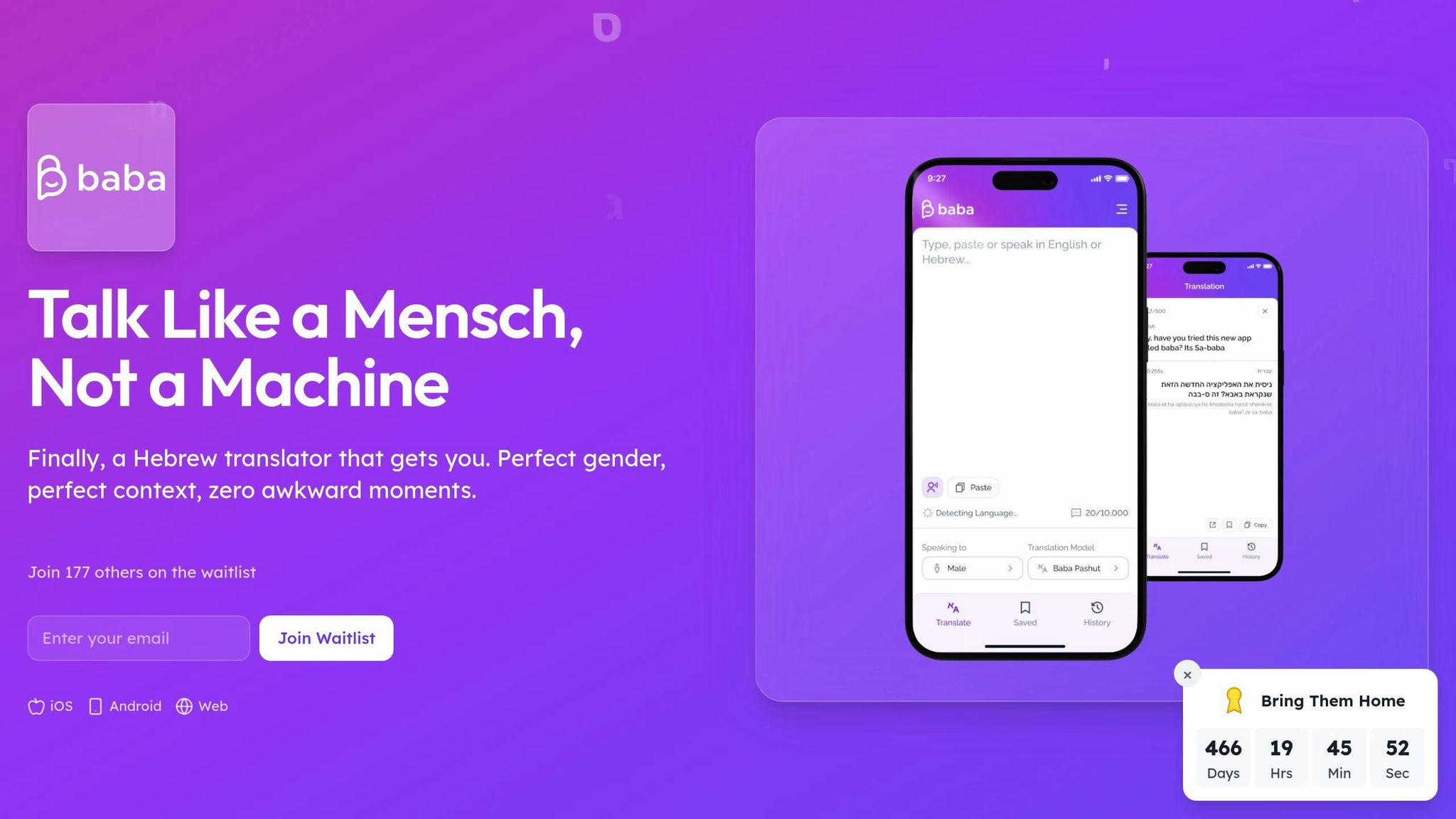
baba addresses common hurdles in Hebrew email communication. It features a smart gender detection system that adjusts translations according to the recipient's gender. The Pro plan includes dynamic translations and insights into cultural nuances, making it a great option for business purposes.
Writing accurate Hebrew emails requires reliable grammar and spell-check tools. Ginger stands out as a top choice, offering real-time corrections and helpful suggestions.
| Tool Type |
Primary Function |
Best For |
| Grammar and Spell Checker |
Fixes errors and typos |
Formal business emails |
| Style Analyzer |
Enhances tone and style |
Client communications |
For those unfamiliar with Hebrew keyboards, transliteration tools make typing easier. Platforms like Google's Hebrew keyboard and Transliterate.com let users type Hebrew using English characters.
sbb-itb-7e51dcc
Tips for Writing Professional Hebrew Emails
Writing a professional email in Hebrew requires attention to detail and cultural sensitivity. Here's how to ensure your message is clear, accurate, and appropriate.
Reviewing Hebrew Emails
Before hitting "send", take a moment to review the technical and linguistic aspects of your email. Pay close attention to these areas:
| Review Area |
What to Check |
Common Issues |
| Technical Format |
Character display, text alignment |
Display problems |
| Grammar & Spelling |
Gender agreement, plural forms |
Grammar mistakes |
| Cultural Context |
Formality level, use of honorifics |
Tone mismatches |
| Structure |
Clear subject line, logical flow |
Confusing messaging |
After addressing these elements, make sure the tone of your email suits both the recipient and the situation.
Adjusting Tone for Different Audiences
The tone of your email should reflect your relationship with the recipient and the purpose of the communication. For formal introductions, use respectful phrasing like לכבוד מר/גב. For ongoing interactions, you can adopt a slightly warmer tone while staying professional. Internal emails can be more casual but should remain clear and concise.
Here’s how to tailor your tone:
-
Initial Business Contact: Stick to formal language and complete sentences.
-
Ongoing Professional Relationships: Add warmth while maintaining professionalism.
-
Internal Team Communication: Be friendly but ensure clarity in your message.
Israeli business culture tends to favor direct communication, but the level of formality should always match the context and your relationship with the recipient [1][2].
Mastering Hebrew Email Writing
Writing professional Hebrew emails requires a mix of technical know-how and cultural understanding. To communicate effectively in Hebrew, you need to focus on both the structure of your emails and the cultural expectations of Israeli business communication.
| Aspect |
Best Practice |
Why It Matters |
| Technical Format |
Use proper formatting and alignment |
Ensures clarity and readability |
| Language Structure |
Pay attention to gender and plural forms |
Reflects cultural and linguistic accuracy |
| Tool Integration |
Leverage translation and grammar tools |
Produces precise, context-aware content |
| Cultural Alignment |
Match the level of formality to the situation |
Builds stronger professional connections |
Today’s tools make Hebrew email writing easier. Platforms like baba combine translation and grammar features with cultural context, ensuring your emails are not only accurate but also appropriate for professional settings.
Israeli business culture values directness but also expects a certain level of formality. Striking this balance, along with paying attention to technical details, is key to building successful professional relationships. Whether you're negotiating a deal in Tel Aviv or collaborating with Israeli colleagues, understanding these elements will serve you well.
Improving your Hebrew email skills is an ongoing journey that also enhances your grasp of Israeli business culture. By blending technical precision with cultural sensitivity, you’ll be well-prepared to handle any professional communication in Hebrew.
Success in Hebrew business communication lies in respecting both traditional practices and modern tools. With the insights and strategies shared here, you’ll be ready to excel in crafting professional Hebrew emails.
FAQs
How do you greet someone in a Hebrew email?
The greeting you choose in a Hebrew email depends on how formal the situation is and your relationship with the recipient:
| Context |
Greeting |
When to Use |
| Formal Business |
לכבוד מר/גב (Dear Mr./Mrs.) |
For first-time contacts or official emails |
| Professional |
שלום (Shalom) |
Standard for business emails or familiar contacts |
| Casual Business |
היי (Hi) |
For colleagues or informal exchanges |
Keep subject lines short and to the point. Make sure you use standard encoding settings so Hebrew characters appear correctly on all email platforms.
How should I close a Hebrew email professionally?
For professional closings, check out the earlier section on "Closing Hebrew Emails." It covers formal, semi-formal, and casual options based on the situation.
How can I ensure Hebrew text displays correctly?
To ensure Hebrew text appears as intended, use right-to-left formatting and UTF-8 encoding. Most modern email platforms handle these settings automatically.
Use tools like baba or Hebrew grammar checkers to ensure your emails are accurate and culturally appropriate. These tools help you maintain professionalism while respecting cultural norms.
These FAQs tackle common questions about Hebrew email writing, making it easier to communicate effectively in professional contexts. Balancing technical precision with cultural awareness is key to successful communication.
Frequently Asked Questions
How does Hebrew gendered grammar affect professional emails?
Hebrew verbs, adjectives, and even some nouns change form depending on whether you're addressing a man or a woman, so using the wrong gender agreement can make an email sound careless or confusing to a native reader. For example, 'אני שמח לשמוע ממך' versus 'אני שמחה לשמוע ממך' signals the sender's gender, and getting this wrong stands out immediately. A Hebrew-first translation tool that detects gender context, like baba, helps you get this right without having to memorize every rule.
Is it okay to write a Hebrew business email using transliteration instead of Hebrew characters?
In professional contexts, writing in actual Hebrew script is strongly preferred — using transliteration (writing Hebrew sounds in Latin letters) reads as informal and can come across as unprepared or disrespectful to the recipient. If you're not comfortable typing in Hebrew, use a translation tool or Hebrew keyboard input rather than sending phonetic workarounds.
What days and times should I avoid sending Hebrew business emails in Israel?
Shabbat runs from Friday at sunset to Saturday night, and many Israeli professionals do not check or respond to emails during that window. Major Jewish holidays like Rosh Hashanah, Yom Kippur, and Passover also affect availability significantly, so scheduling emails or meeting requests around those periods shows cultural awareness and tends to get a better response.
How do I handle slang or casual Hebrew in a work email without sounding awkward?
Israeli workplace culture is often more informal than other business cultures, but casual slang works best in internal team chats rather than client-facing or first-contact emails. If you want to strike a warm but professional tone, lean on semi-formal phrasing rather than street slang — and if you're unsure whether an expression lands right, run it through a context-aware translator that accounts for Israeli cultural nuance rather than a literal word-for-word tool.
What's the difference between בברכה and בכבוד רב as email sign-offs?
בברכה (With Blessings) is the standard go-to closing for most professional Hebrew emails — warm, widely accepted, and never out of place. בכבוד רב (With Great Respect) carries more weight and is best reserved for formal correspondence like government communications, legal matters, or first-time outreach to senior figures where you want to signal extra deference.