Human Translators: Handling Cultural and Language Details
Human translators offer a level of cultural and linguistic expertise that AI systems simply can't replicate. While AI translation tools often struggle with the complexities of Hebrew's cultural and linguistic layers, human translators bring a deep understanding that bridges these gaps. Their ability to interpret language mechanics alongside cultural context allows them to handle Hebrew's subtleties with a precision that machines lack.
What Human Translators Do Best
Human translators excel by understanding the cultural depth woven into Hebrew. For example, Hebrew is closely tied to Jewish culture, where phrases and idioms often carry meanings that go beyond their literal translation. This cultural sensitivity enables translators to adapt content so it resonates with the target audience while staying true to the original message. Translation isn’t just about converting words; it’s about capturing the essence of the source text and making it meaningful in another cultural context [9][7].
Hebrew's richness in idioms, proverbs, and cultural references poses a unique challenge. These expressions often don’t have direct equivalents in other languages, but human translators can creatively adapt them to ensure the intended meaning and cultural weight are preserved [1]. They also adjust cultural references to make them relatable to the target audience without losing their original significance.
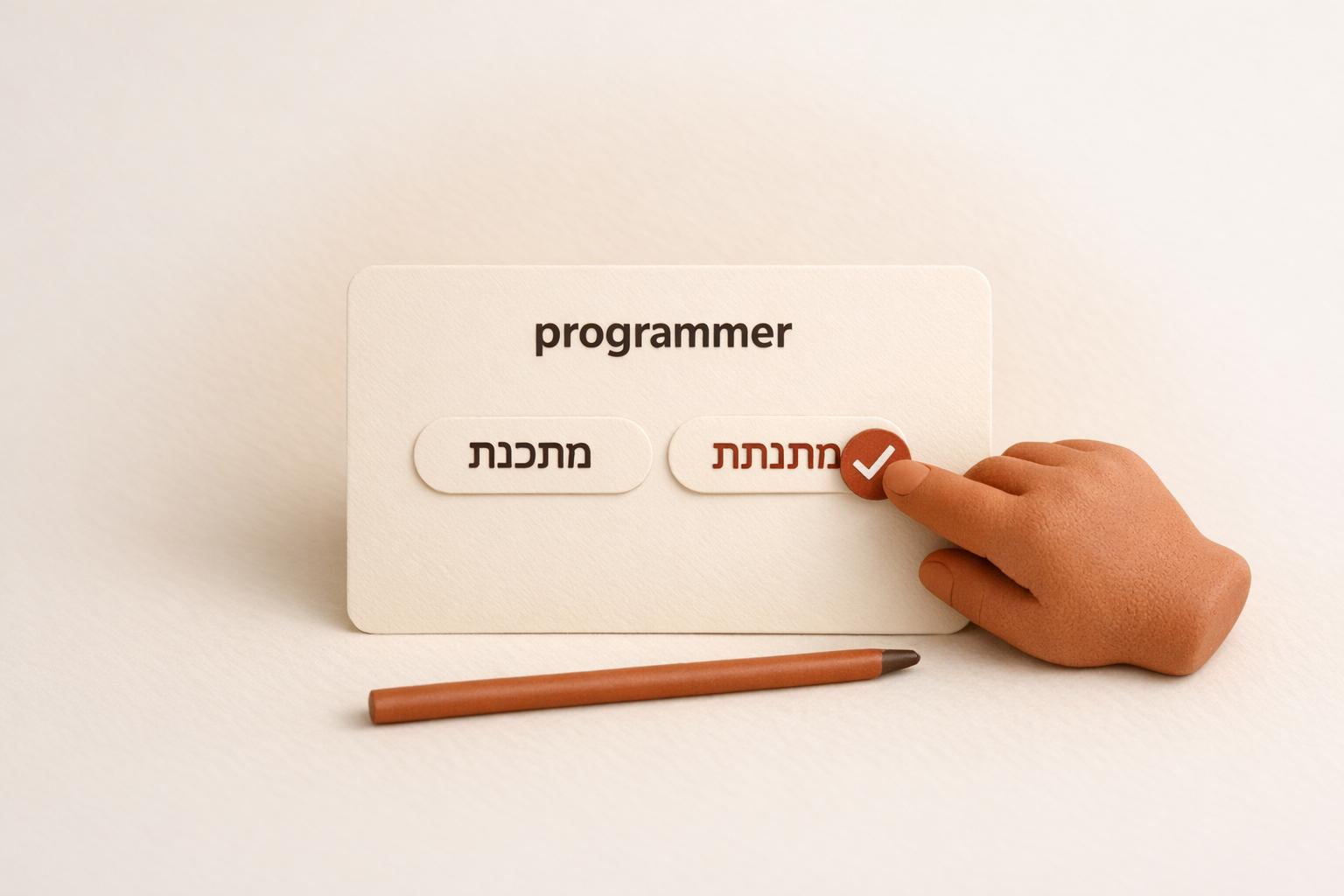
Another key area where human translators shine is in handling Hebrew’s gendered language system. Automated systems often default to masculine forms when gender is unclear, but human translators consider the broader context, audience, and purpose to make more nuanced choices. This attention to detail ensures translations are accurate and culturally appropriate, something AI struggles to achieve.
When Humans Beat AI
Human translators consistently outperform AI in situations requiring cultural sensitivity and precision. Their skills are particularly vital for translating legal, religious, and literary texts, where even minor errors can have significant consequences. For instance, business translations demand more than just literal accuracy - they require preserving the original message’s intent, tone, and meaning to effectively communicate with the target audience [9].
Religious and literary works, in particular, call for a deep understanding of the cultural and historical context. Translators must account for customs, sociocultural nuances, and even historical events to deliver accurate and meaningful translations [8]. In literature, preserving the original style and aesthetic appeal requires creativity and sensitivity that AI simply can’t replicate.
Marketing and promotional materials also benefit from the human touch. Translators adapt content to align with local cultural norms, ensuring messages connect with Israeli consumers rather than coming across as out of touch [6]. Similarly, sensitive communications, such as diplomatic correspondence or personal letters, rely on the emotional intelligence of human translators to convey the right tone and nuance [10].
In specialized fields like legal, medical, technical, or academic translation, human expertise is indispensable. Translators in these areas ensure not only linguistic accuracy but also compliance with specific legal or technical standards [6]. They often work in teams with bilingual professionals to meticulously review translations, guaranteeing both precision and cultural appropriateness [6].
Get on the waitlist for our mobile app at www.itsbaba.com
sbb-itb-7e51dcc
AI vs Human Translators for Hebrew: Direct Comparison
When it comes to translating Hebrew, the choice between AI and human translators often boils down to four key factors: accuracy, cost, timeline, and content type. Both methods have their strengths and weaknesses, and understanding these can help you make the right decision for your needs.
AI translations are fast and affordable, making them perfect for handling large volumes of text. Tasks like translating user interface strings, product descriptions, or basic customer support content are areas where AI shines. AI tools can deliver translations with 70–85% accuracy, which is sufficient for repetitive and straightforward tasks [13]. However, they often falter when it comes to Hebrew's complex grammar rules and cultural subtleties. For instance, Hebrew pluralization follows certain patterns but also includes many exceptions that AI struggles to handle [12].
On the other hand, human translators bring a level of expertise that AI cannot match. They excel at interpreting cultural nuances and adapting tone and style to resonate with Israeli audiences. Human translators typically achieve 95–100% accuracy and can make precise adjustments for gender and plural forms, ensuring the translation aligns perfectly with the context [4][11]. This makes them indispensable for projects requiring a high level of cultural and linguistic sensitivity, such as marketing materials, legal documents, or creative content.
Comparison Chart: AI vs Human Translators
| Aspect |
AI Translation |
Human Translation |
| Speed |
Quick |
Slower; includes time for review |
| Cost |
Affordable [13] |
Higher but competitive pricing [13] |
| Accuracy |
70–85% [13] |
95–100% [13] |
| Cultural Understanding |
Limited; struggles with nuances |
Strong cultural awareness and adaptation |
| Hebrew Gender/Plural Handling |
Defaults to masculine; lacks contextual accuracy [11] |
Uses contextual judgment for precise forms |
| Scalability |
Easily handles large-scale projects |
Limited by human capacity |
| Best Use Cases |
UI strings, product descriptions, repetitive content |
Marketing copy, legal documents, creative content |
| Quality Control |
Requires additional review and editing |
High accuracy with professional oversight |
For many Hebrew translation projects, a hybrid approach can offer the best of both worlds. AI can provide an initial draft quickly and at a low cost, while human translators refine the output to ensure it meets cultural and linguistic standards. This combination leverages the speed of AI with the precision and depth of human expertise, delivering results that balance efficiency with quality.
Want to stay updated? Join the waitlist for our mobile app at www.itsbaba.com.
How baba Preserves Hebrew Cultural Identity
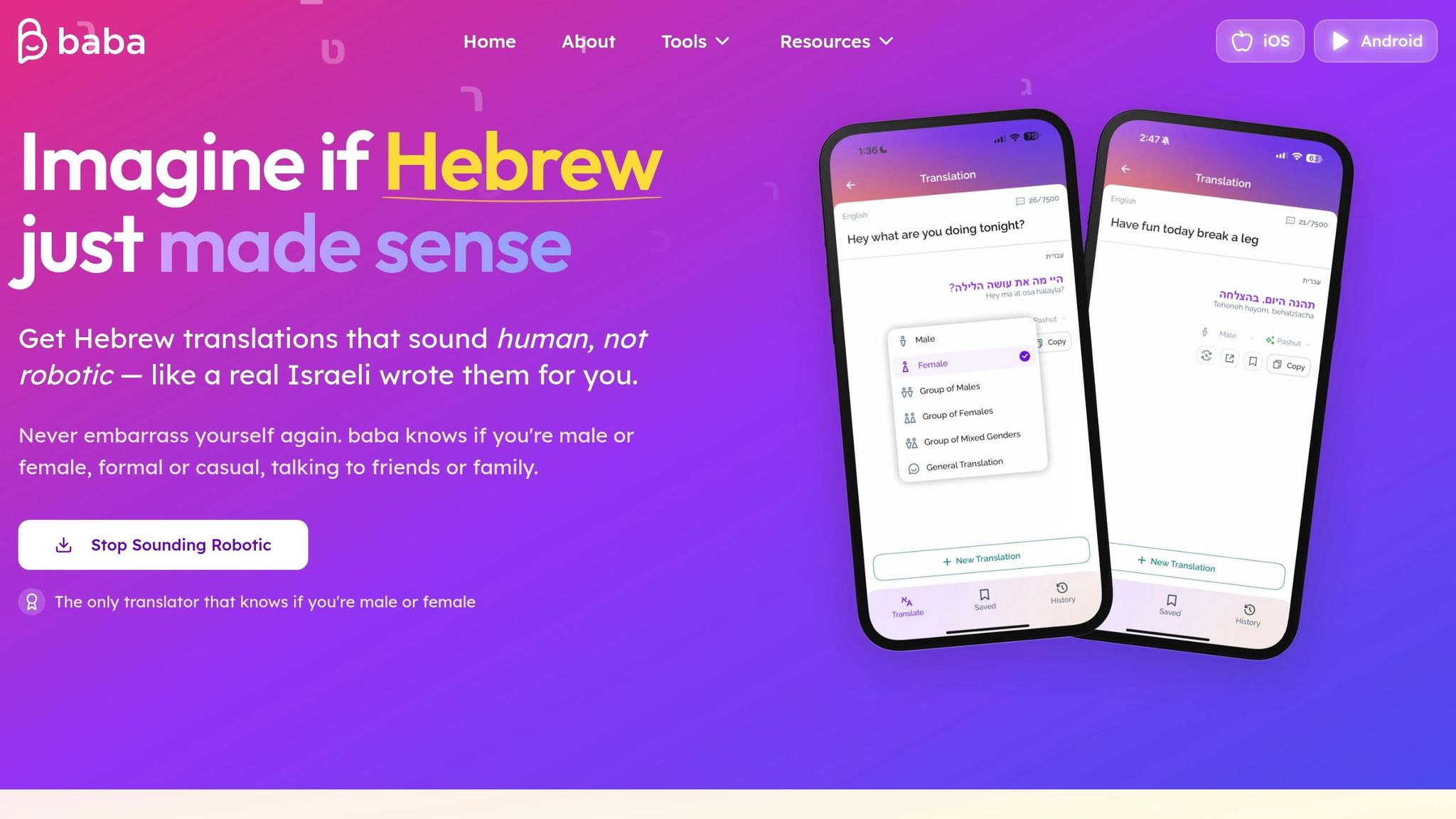
To tackle the challenges of translating Hebrew, baba has refined its approach to ensure that the language's cultural identity is preserved. Hebrew, with its intricate grammar and cultural depth, often trips up traditional AI translation tools. baba, developed by Hebrew language experts in Tel Aviv, stands out as a solution specifically designed to address these complexities.
Unlike standard translation tools that might default to masculine forms or miss critical cultural subtleties, baba’s AI-powered platform prioritizes both grammatical and cultural accuracy. The app currently boasts a perfect 5.0 rating on the App Store from 13 reviews, with users praising its ability to navigate Hebrew’s unique challenges [17].
baba's Gender and Plural Recognition
Hebrew’s gendered structure presents a significant hurdle for AI translation. baba tackles this with its Smart Gender Recognition technology, which adjusts translations to fit male, female, or mixed audiences, avoiding frequent gender-related errors [16]. Interestingly, even native Hebrew speakers often struggle with gender agreement in numerals [14]. baba’s system goes beyond basic word substitution, relying on contextual understanding to get it right.
Another challenge lies in Hebrew’s plural forms. While feminine plurals typically end in -ōṯ and masculine in -īm, many nouns deviate from these rules based on context. For example, post-biblical Hebrew often uses -ōṯ plurals even when Biblical Hebrew follows different conventions [15]. baba’s AI is trained to recognize and adapt to these patterns and exceptions, ensuring singular and plural forms are accurate [16].
"This app translates properly when you're speaking to men, women and really just anyone. It also accounts for slang and expressions that any other translator would not translate properly. Really cool!" - iowitz, App Store Reviewer [17]
Custom Hebrew Translation Solutions
baba’s Context-Aware Translation technology takes things a step further by tailoring translations to fit specific communication scenarios. Whether it’s a casual text to a friend or a formal business email, the app adjusts tone, slang, and formality to match the context, ensuring messages resonate authentically.
For professionals, baba Pro offers extended functionality, allowing translations of texts up to 7,500 characters. This makes it an excellent tool for emails, documents, and other professional communications, where both grammatical precision and cultural alignment are critical [16].
AI Translation Development Progress
baba’s journey reflects the strides being made in AI translation, especially in handling cultural context and nuanced meanings. In June 2026, baba launched version 1.1.1, introducing upgrades like "Mahir m1.5" for enhanced contextual awareness and "Chacham c1.5" for improved grammar precision, particularly in gender and tone. These updates have significantly sharpened the app’s ability to deliver accurate translations across various contexts [17]. Additionally, users can select from multiple AI models, balancing speed and depth based on their specific needs [16].
This commitment to continuous improvement highlights a larger trend in AI translation: by focusing exclusively on Hebrew-English translation, baba dedicates its resources to mastering the intricate challenges of Hebrew. This ensures translations remain both linguistically accurate and culturally meaningful.
Want to try it for yourself? Join the waitlist for baba’s mobile app at www.itsbaba.com.
Conclusion: When to Use AI vs Human Translators
Choosing between AI and human translators for Hebrew isn’t about picking a "better" option - it’s about identifying the right tool for your specific needs. Both have distinct advantages that shine in different scenarios.
Main Points
Here’s a quick recap of the key takeaways:
AI translation is perfect for speed and high-volume tasks. AI tools can achieve an accuracy rate of 70–85%, especially when paired with translation memory and glossaries [13]. This makes them a great fit for translating user interface text, help center articles, product descriptions, and other straightforward content where speed matters more than perfect tone [13]. In fact, a Forbes study found that 44% of businesses plan to use AI for creating multilingual content [5].
Human translators are indispensable for high-stakes content. With an accuracy rate of 95–100%, human translators are essential for legal documents, medical texts, marketing campaigns, and any material requiring cultural sensitivity and nuanced understanding [13]. However, this level of precision comes at a cost - professional translations range from $0.08 to $0.25 per word, meaning a 10,000-word website could cost up to $2,500 [5].
A hybrid approach is becoming increasingly popular, with a 60% growth in adoption among organizations looking to balance speed and quality [5]. This method uses AI for initial drafts, followed by human refinement to ensure cultural and contextual accuracy.
As we’ve explored, each method has its place. baba bridges this gap by combining AI’s efficiency with Hebrew-specific expertise. Unlike generic tools that might default to masculine forms or miss important nuances, baba’s Smart Gender Recognition and Context-Aware Translation technology offers the speed of AI while addressing the complexities of Hebrew.
Try baba
Ready to experience Hebrew translation that’s both fast and culturally precise? baba’s AI-powered platform handles Hebrew’s gender system, plural forms, and context with ease. Whether you need quick, everyday translations or polished, professional content, baba adapts to your needs.
Join the waitlist for our mobile app at www.itsbaba.com and see how context-aware translation can elevate your Hebrew communication from clunky to authentic.
FAQs
How does combining AI-generated drafts with human expertise enhance Hebrew translations?
By combining AI's speed and reliability with the expertise of human translators, this method delivers Hebrew translations that go beyond just accuracy - they feel genuine and culturally aligned. AI handles the initial drafts efficiently, while human translators step in to refine the text, addressing intricate details like gender, plural forms, and context-specific meanings. The result? Translations that not only make sense linguistically but also honor the cultural depth and heritage of the Hebrew language.
Hebrew poses some distinct hurdles for AI translation tools, mainly because of its grammatical complexity and the subtleties tied to its cultural context. For starters, Hebrew relies on a gendered system and specific plural forms, which means translations often need to account for context to get the nuances right. Adding to the challenge, written Hebrew frequently omits vowels, leaving AI to infer the intended meaning - a tricky task without sufficient context clues.
Another layer of difficulty comes from Hebrew's multiple word meanings and its flexible sentence structures, which can shift significantly depending on the situation. These features often require a deep understanding of both the language and its cultural backdrop - something AI tools still struggle to fully grasp. For translations that sound natural and align with Hebrew’s cultural depth, tools like baba stand out by combining advanced AI with a respect for the language’s rich traditions.
Want to experience it yourself? Join the waitlist for our mobile app at www.itsbaba.com.
When is it better to use a human translator instead of AI for Hebrew content?
When your Hebrew content demands a keen understanding of cultural subtleties, emotional depth, or intricate linguistic details, human translators often shine. They bring a unique ability to interpret idioms, humor, and context-specific nuances that AI tools might miss.
For tasks like creative writing, marketing campaigns, or any project where accuracy and cultural connection are key, human translators ensure your message feels authentic and natural to the audience. Their skill in making thoughtful, nuanced decisions is especially valuable when preserving the rich heritage and intricate layers of the Hebrew language.
Looking for seamless, context-aware Hebrew translations? Join the waitlist for our mobile app at www.itsbaba.com.
Frequently Asked Questions
Can AI handle Hebrew slang and informal expressions accurately?
Most generic AI tools struggle with Israeli slang because it relies heavily on cultural context, tone, and evolving street usage that training data rarely captures well. A Hebrew-first tool built with slang awareness can adjust for informal register and idiomatic meaning rather than producing a word-for-word translation that sounds foreign to native speakers.
How does gender work in Hebrew translation and why do tools get it wrong?
Hebrew verbs, adjectives, and even numbers change form depending on the grammatical gender of the subject, and most AI systems default to masculine when context is ambiguous, which is often inaccurate and can feel dismissive or odd to readers. Getting gender right requires understanding who is being addressed and in what situation, not just pattern-matching words.
What is a hybrid translation approach and is it worth the extra effort?
A hybrid approach uses AI to produce a fast initial draft, then brings in a human reviewer to fix cultural nuance, tone, and grammar precision before the content goes live. For Hebrew specifically, this combination tends to outperform either method alone, especially for marketing copy, legal documents, or anything a native Israeli audience will read critically.
Is AI translation good enough for a business website or professional content in Hebrew?
For high-volume, repetitive content like product descriptions or help articles, AI translation can be a practical starting point, but professional or customer-facing Hebrew copy usually needs human review to catch gender errors, awkward phrasing, and cultural misfires that would undermine credibility with Israeli readers.
How do I translate a Hebrew sign or screenshot when I'm traveling in Israel?
A mobile or browser-based translation tool that handles unvowelized Hebrew text and reads context clues is the most practical option on the go, since Hebrew written without nikkud requires inference beyond simple character recognition to produce a meaningful translation rather than a literal guess.