Set up real-time Hebrew translation for live events with tools that handle RTL text, gender, and context so attendees follow along naturally.
Real-Time Hebrew Translation for Live Events
Real-time Hebrew translation helps live event attendees understand and engage with content in their preferred language. It uses AI tools or human interpreters to provide instant translations, accessible via QR codes or URLs. Here's what you need to know:
Why It Matters: Over 80% of the global population doesn't speak English. Translation services make events more inclusive and productive.
Challenges: Hebrew's right-to-left script, gender rules, and text expansion require specialized tools and careful planning.
Solutions: Tools like Wordly, Interprefy, and baba combine AI speed with human accuracy to handle Hebrew's complexities.
Setup: Small events need earbuds and a strong internet connection, while larger ones require interpreter booths, microphones, and receivers.
Applications: Useful in business meetings, community events, and academic settings for seamless communication.
For a successful event, choose the right tools, prepare content in advance, and test equipment thoroughly.
Main Challenges in Hebrew Translation
Hebrew Language Specifics
Hebrew presents unique challenges for translation due to its right-to-left (RTL) script, gender rules, and text expansion. The RTL format requires careful adjustments to user interfaces (UI), ensuring proper alignment and functionality. Additionally, Hebrew's intricate gender system influences pronouns, nouns, adjectives, prepositions, and verbs, making accurate translation more complex [3].
Text expansion is another hurdle. Translating from English to Hebrew often results in longer content, which can complicate subtitle displays or presentation slides during live events [4]. For example, Speechmatics highlights the importance of maintaining consistent terminology despite Hebrew's morphological complexity in real-time scenarios [5].
Effectively managing these linguistic challenges requires advanced technical solutions.
Technical Requirements
Real-time Hebrew translation demands a careful balance between speed and accuracy. According to Speechmatics, their system achieves 90% accuracy with less than one second of latency, operating 60% faster than comparable tools [5].
For live events, specific technical challenges and solutions include:
Challenge
Impact
Recommended Approach
Latency vs. Accuracy
Faster processing may reduce context and accuracy
Aim for latency under 4 seconds while maintaining clarity
Background Noise
Affects speech recognition quality
Test tools in environments similar to the event venue
UI Adaptation
RTL layout impacts interface elements
Mirror buttons, menus, and other UI components [4]
Text Processing
Expanded text can disrupt layouts
Use flexible designs to accommodate varying text lengths [4]
"The small accuracy impact at lower latencies in real-time (<4s) comes due to having less context from the speaker." - Speechmatics [5]
To ensure smooth operation, event organizers should conduct thorough pre-event testing and confirm that translation tools work seamlessly across devices and screen sizes [4].
Modern AI solutions, such as Translation Memory and Pre-Translation Toolkits, help standardize terminology while respecting cultural nuances, ensuring effective real-time Hebrew communication.
Real-time translation is crucial for navigating the complexities of Hebrew during live events. With the technical needs discussed earlier in mind, here are some top tools designed for real-time Hebrew translation.
Popular Translation Tools
Several platforms offer reliable Hebrew translation features:
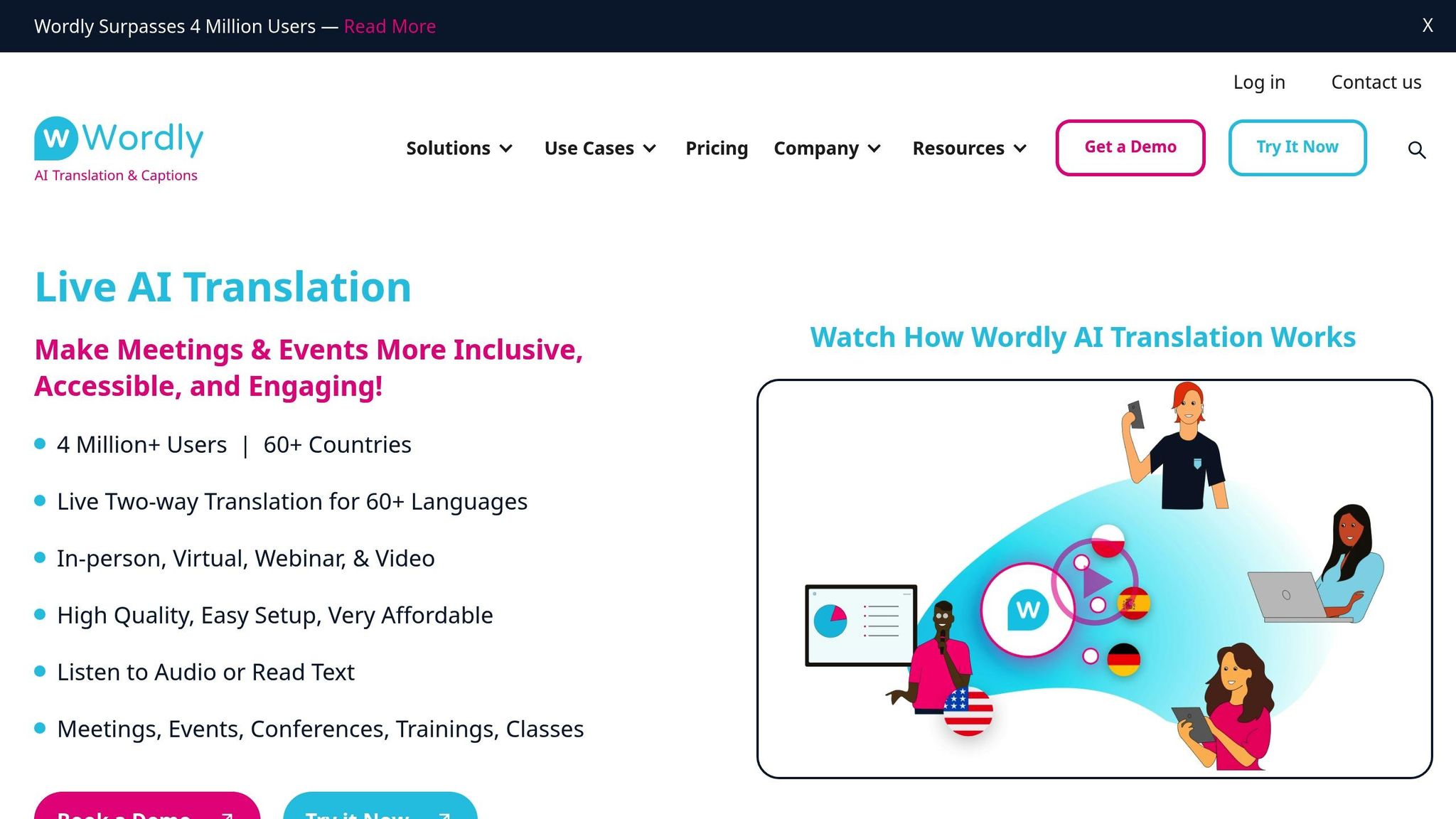
Wordly: Delivers over 500 million minutes of translation across 60+ languages, requiring minimal setup and integrating easily with video conferencing platforms [1].
Boostlingo Events: Handles large events with real-time speech and captions, though it may struggle with highly specialized terminology [6].
Interprefy: Combines AI with human interpreters, making it a strong choice for complex events needing high accuracy, albeit at a higher cost [6].
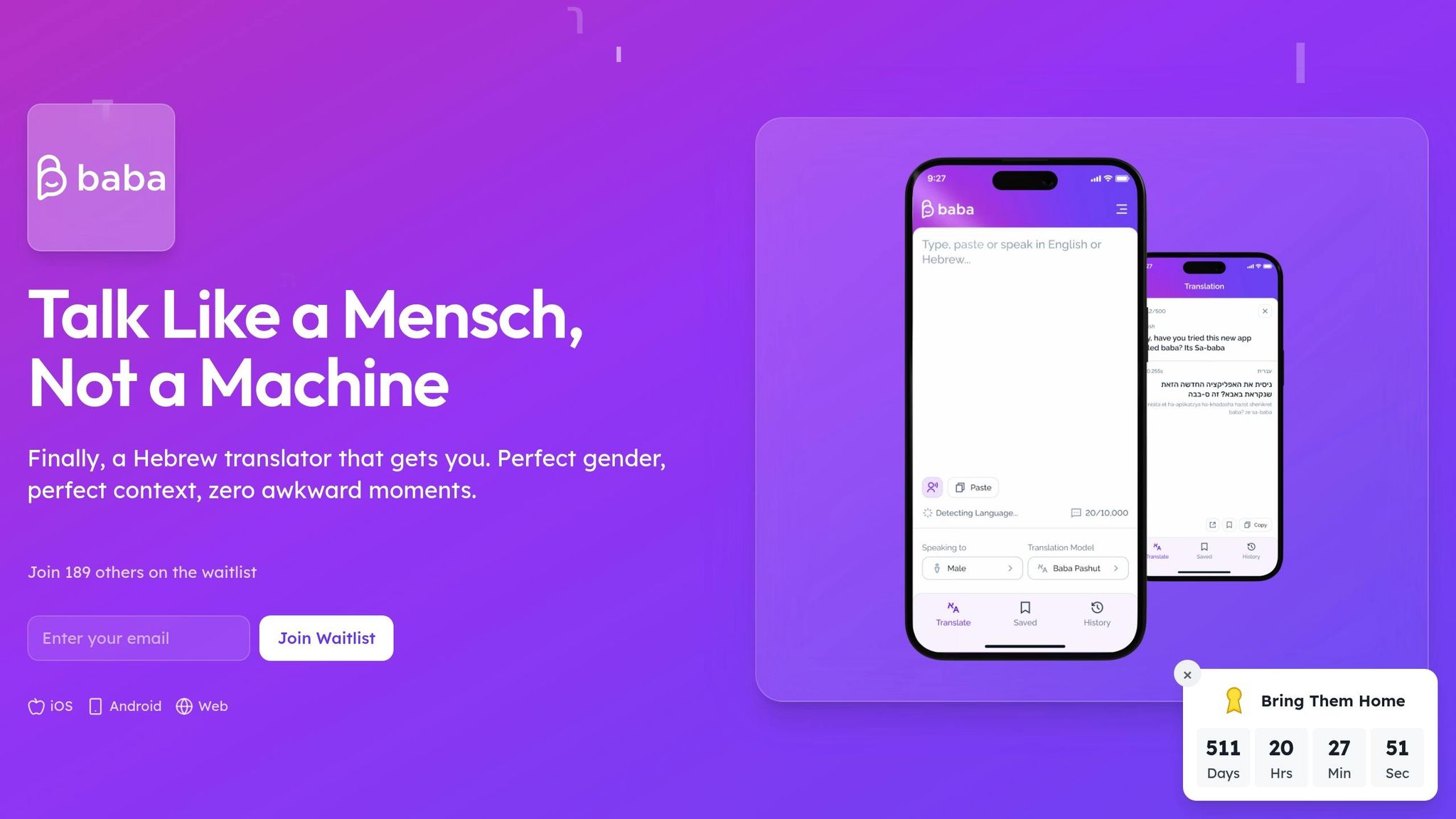
One standout solution specifically designed for Hebrew is baba – Smart Hebrew Translation.
baba offers translations that reflect cultural nuances through context-aware technology. This ensures clear and confident communication, whether in business meetings or casual settings. Interested users can join the waitlist for baba’s mobile app at www.itsbaba.com.
Comparing Tools
Here’s a closer look at how these tools perform in key areas:
Accuracy and Speed
AI-Media: Provides reliable support with only minor real-time delays [6].
Maestra: Handles live audio for over 125 languages with minimal lag [7].
Tactiq: Focuses on Hebrew meetings while supporting 35+ other languages [8].
Integration Options
Maestra: Offers real-time captions and integrates with OBS, vMix, and Chrome extensions.
Kudo: Blends human and AI translation with customizable integration features.
AI-Media: Supports live captioning across major video platforms.
When selecting a tool, consider factors like event size, content type, budget, technical support, and integration needs. Translation technology continues to improve in tackling Hebrew’s unique challenges while delivering the speed and precision required for live events.
sbb-itb-7e51dcc
Setting Up Live Hebrew Translation
Equipment Needs
To set up live Hebrew translation, choose your hardware and software based on the size of your event.
For smaller gatherings (fewer than 50 participants):
Timekettle WT2 Edge/W3 translator earbuds ($299.99): Great for two-way conversations.
A stable internet connection with at least 10 Mbps upload/download speeds.
A smartphone or tablet to run translation apps.
For larger events (50 or more participants):
Williams Sound PPA R37 Receivers ($135.00 each or $1,350.00 for a 10-pack).
Interpreter booths with proper soundproofing.
Professional microphones and headsets for clear communication.
An audio mixing console to manage multiple audio feeds.
A transmission system to distribute translations effectively.
Pre-Event Planning Steps
Proper planning is key to a smooth translation experience. Here's what to focus on:
Technical Setup:
Test your internet connection and have a backup ready.
Configure all audio equipment and translation tools in advance.
Set up interpreter stations or virtual translation platforms.
Ensure audio routing works seamlessly between speakers and interpreters.
Content Preparation:
Upload speaker presentations and any supporting documents.
Build a glossary for specific industry terms.
Translate visual materials ahead of time.
Use clear signage to inform attendees about translation options.
Communication Protocols:
Train speakers on using microphones properly.
Implement push-to-talk systems for sessions in multiple languages.
Create slides showing how attendees can access translations.
Place signs in meeting rooms to highlight translation services.
Problem-Solving Guide
Even with careful planning, issues may arise. Here’s how to handle common problems:
Audio Quality Issues:
Mute interpreters when they’re not speaking.
Use noise-canceling headsets for better clarity.
Position microphones at an appropriate distance from speakers.
Translation Accuracy:
Import custom glossaries for specialized terms.
Use real-time editing tools to fix captions on the fly.
Enable automatic language detection for multilingual sessions.
Connection Problems:
Always have a backup internet connection ready.
Ensure technical support is on hand throughout the event.
Prepare offline translation options as a contingency.
Where to Use Hebrew Translation
Business Meetings and Conferences
Real-time Hebrew translation plays a key role in international business, bridging communication gaps between Hebrew speakers and global partners [11]. For virtual meetings, AI platforms offer a practical and scalable solution. For instance, during the CBMC Asia Pacific Convention (October 23–26, 2026), organizers used Interprefy AI Speech Translation to connect business leaders from various regions [2].
Some common business uses include:
Negotiating international trade deals involving Israeli companies
Delivering investment pitches for Israeli startups
Conducting corporate training for multinational teams
Hosting board meetings with Israeli participants
Real-time translation isn't just for corporate settings - it also helps foster connections in community spaces.
Community Events
Translation services are just as impactful at community and cultural events. This is especially true in the United States, home to the second-largest Hebrew-speaking population (around 220,000 fluent speakers) [10].
"We don't just interpret words; we weave connections through our unparalleled Hebrew interpretation services." – The Translation Gate [11]
These services enhance inclusivity during:
Cultural festivals with live translation
Religious ceremonies, offering real-time interpretation for attendees
Artistic performances, making them accessible to non-Hebrew speakers
Community gatherings of diverse participants
For example, on July 16, 2026, VISITFLANDERS used Interprefy's translation services to create a more inclusive and engaging experience [2].
Academic Settings
Academic institutions also benefit greatly from Hebrew translation. These services help overcome language barriers in scenarios like:
Research presentations where Israeli scholars address global audiences
Student exchange programs that connect diverse participants
Multilingual academic conferences
At the Women's HealthTech Conference on July 30, 2026, AI translation made complex medical and technical discussions accessible to a wider audience [2]. Combining human expertise with AI tools is a practical way to handle both nuanced and large-scale academic events.
Summary and Next Steps
Using the detailed planning and technical tips provided earlier, here's a checklist to help you finalize your event setup:
1. Pre-Event Planning
Evaluate your event's specific needs.
Assign a program manager to oversee the process.
Create a glossary to clarify key terminology for everyone involved [1].
2. Choose the Right Tools
Pick translation software that matches your event's requirements. Here's a quick comparison of popular platforms:
Platform
Best For
Key Features
Wordly
General events
Auto language detection; translated transcripts [1]
Once you've chosen your tools, move on to setting up the technical side.
3. Technical Setup
Test your internet connectivity to ensure smooth performance for remote interpreters [9].
Check audio quality and volume levels for clarity [9].
Link translation platforms to your video systems.
Set up QR codes or direct URLs to make access seamless for attendees [1].
To maintain high standards, conduct regular quality assurance testing with native Hebrew speakers [12]. This helps catch issues like text rendering problems, right-to-left alignment errors, and other usability concerns. Additionally, set up a system for ongoing updates to keep your localization efforts in line with software changes [12].
Frequently Asked Questions
How does Hebrew's gendered grammar affect real-time translation accuracy at live events?
Hebrew assigns gender to nouns, pronouns, adjectives, and verbs, so a tool that ignores grammatical gender will produce output that sounds immediately wrong to native speakers. For live events, this means using a Hebrew-aware translation engine—not a generic one—is critical to avoid awkward or confusing phrasing in real time.
What's a realistic latency target for live Hebrew speech translation?
For live events, keeping latency under four seconds is the practical benchmark—beyond that, the delay becomes disruptive to natural conversation flow. The tradeoff is that faster processing gives the engine less spoken context to work with, which can slightly reduce accuracy, so testing in your actual venue environment matters.
Do I need special equipment for Hebrew translation at a small event versus a large one?
For gatherings under 50 people, a smartphone or tablet running a translation app with a stable 10 Mbps connection and personal earbuds is usually enough. Larger events need interpreter booths, professional microphones, audio mixing consoles, and wireless receiver systems to distribute audio reliably to all attendees.
Why do subtitles or slides sometimes break when translating from English to Hebrew?
Translated Hebrew text frequently runs longer than the original English, and it displays right-to-left, so fixed-width subtitle boxes or slide layouts that weren't built with flexibility in mind will overflow or misalign. The fix is to design layouts with expandable text containers and test RTL rendering before the event goes live.
What's the best way to handle specialized or industry-specific Hebrew terminology at a conference?
Building a custom glossary before the event and importing it into your translation platform is the most reliable approach—it locks in consistent terminology for technical or niche terms that general AI models may mistranslate or approximate. Pairing that with real-time caption editing gives you a safety net for anything the glossary misses.