Human Translation for Hebrew Contracts
When it comes to translating Hebrew contracts, human translators bring a level of cultural understanding and legal expertise that machines simply can't match. While human translation often takes more time and involves higher costs, the skills these professionals bring can be the deciding factor in critical business deals.
Why Human Translators Are Essential
Human translators excel because they understand the cultural and legal nuances of Hebrew contracts. For example, legal terms like שיפוי (indemnification) and ערבות בנקאית (bank guarantee) don’t just need a word-for-word translation - they require interpretation that reflects their role within Israeli legal frameworks. This level of understanding ensures that the translated contract makes sense in its intended legal and cultural context.
Another area where human translators shine is contextual interpretation. Hebrew contracts often use broad or ambiguous language to allow flexibility. Experienced translators recognize the legal strategy behind this and ensure the same intent is preserved in the target language. They can differentiate between deliberate ambiguity and areas that might need clarification, ensuring the translation fits the original intent.
Human translators also bring the benefit of thorough review processes. Many legal translators work with legal experts to double-check their work, catching potential issues that could lead to costly misunderstandings. They often include explanatory notes to help legal teams better grasp the implications of specific terms, adding an extra layer of clarity.
But, as with any service, there are trade-offs to consider.
Drawbacks of Human Translation
One of the most noticeable challenges is cost. Professional legal translation services can be expensive, particularly for lengthy or complex contracts.
Another drawback is time. Unlike AI tools that can produce translations in seconds, human translators require more time - sometimes days or even weeks - depending on the document's complexity and the translator’s availability. This can slow down time-sensitive negotiations.
Scalability can also become an issue. A single translator can only handle so much work at once, and finding multiple qualified Hebrew legal translators for large-scale projects can be difficult, especially in niche industries.
Lastly, there’s the potential for inconsistencies. Different translators might interpret the same terms slightly differently, which could lead to variations across related contracts or amendments. Maintaining uniform terminology across multiple documents can be challenging without a strong quality control process.
When to Choose Human Translators
Human translators are indispensable for high-stakes agreements like mergers, regulatory compliance documents, or contracts prone to disputes. For example, merger and acquisition agreements or joint venture contracts often justify the added time and expense because of the significant risks involved.
Cultural sensitivity is another situation where human expertise is vital. Contracts that involve international partnerships or religious and cultural considerations require translators who can navigate both the legal and cultural implications of specific terms.
In cases where absolute precision is non-negotiable, human translators are the best choice. The key is determining which contracts truly need this level of detail and which might be better suited for faster, more budget-friendly solutions.
sbb-itb-7e51dcc
Combining AI and Human Translation
Merging the speed of AI with the precision of human expertise creates an effective solution for translating Hebrew contracts. This combined approach leverages the strengths of both methods, addressing the challenges each faces individually. AI takes care of the initial draft, while human translators refine it into a legally precise and polished document.
How AI Plus Human Review Works
The process kicks off with AI generating a draft translation of Hebrew contracts. This draft typically captures standard legal terminology and basic concepts at lightning speed.
Next, professional translators step in for a thorough review. They focus on areas where AI tends to fall short, ensuring the accurate interpretation of complex legal terms like התחייבות כלפי צד שלישי (third-party obligations) and הפרת חוזה יסודית (fundamental breach of contract). These experts resolve ambiguities and refine nuances that automated systems might misinterpret.
During this phase, human reviewers correct errors, improve clarity, and ensure consistent terminology. They may also rephrase awkward sentences or add explanatory notes when direct translations don’t exist. This collaboration combines the efficiency of AI with the depth of human insight.
Benefits of the Combined Method
This hybrid approach offers several advantages. By letting AI handle the initial draft, it reduces turnaround times and cuts costs. Human reviewers then focus on ensuring legal precision and clarity. Additionally, this method enhances quality control, as repeated AI errors are corrected and consistency is maintained across multiple documents.
When to Use the Combined Approach
The hybrid method shines when both speed and accuracy are critical. It’s particularly suited for translating commercial agreements, service contracts, and time-sensitive projects. In these cases, AI drafts the content, and human reviewers ensure the final product meets the highest standards of accuracy and consistency.
AI vs Human vs Combined: Side-by-Side Comparison
Choosing the right translation method comes down to your specific needs, budget, and deadlines. Each option - AI, human, and combined - has its own strengths and compromises, making them suitable for different scenarios.
Below is a quick comparison of these methods across key factors, helping you evaluate which one might work best for your situation.
Translation Method Comparison Chart
This table provides a snapshot of how AI, human, and combined translation approaches measure up in terms of speed, cost, accuracy, and more:
| Factor |
AI Translation |
Human Translation |
Combined Approach |
| Speed |
Near-instant drafts |
Takes several days for standard contracts |
Quicker than human-only, with time for reviews |
| Cost |
Budget-friendly |
Higher costs due to specialized expertise |
Moderately priced, blending automation with oversight |
| Accuracy |
Good for quick drafts and common phrases |
High accuracy with careful attention to legal details |
Balances speed and reliability through expert review |
| Cultural Context |
Basic grasp of Hebrew business nuances |
Excels in capturing deep cultural subtleties |
Adds human insight for enhanced cultural understanding |
| Legal Compliance |
Often requires additional review |
Meets professional standards with thorough legal knowledge |
Ensures compliance through expert human review |
| Consistency |
Produces uniform outputs for similar documents |
May vary depending on translator style |
Combines AI consistency with human judgment |
| Availability |
Always accessible, 24/7 |
Limited to business hours and scheduled appointments |
Flexible scheduling with faster turnaround |
This breakdown highlights the unique advantages and trade-offs of each method.
For tasks requiring the utmost legal precision and nuanced understanding, human translation remains the gold standard. On the other hand, AI is unbeatable when speed and affordability are priorities, especially for routine documents. The combined approach strikes a balance, leveraging AI's efficiency while incorporating human expertise to ensure quality and accuracy.
When deciding, consider the nature of your document and the level of risk involved. High-stakes agreements with legal and financial complexities often justify the investment in human expertise. For simpler tasks, AI can save time and money. Meanwhile, the combined method often proves to be a practical choice, offering a cost-effective and reliable middle ground for many business needs.
Choosing Your Hebrew Contract Translation Method
When deciding how to translate your Hebrew contracts, consider your budget, timeline, and the complexity of the document.
Main Points to Keep in Mind
Here are some practical tips to help you make the right choice:
- For urgent, budget-friendly projects, AI translation is a solid option. It’s great for routine agreements or internal drafts where absolute legal precision isn’t immediately required.
- High-stakes agreements call for a hybrid approach. By blending AI’s speed with the expertise of native-speaking professionals, this method ensures accuracy and respects cultural nuances - all while keeping costs and timelines manageable.
- When you have more time, human translation is the way to go for critical documents. The added expense often leads to better compliance and a deeper understanding of cultural subtleties, which is especially important for contracts reviewed by multiple parties.
- Short, critical clauses? Go human. Long, routine contracts? AI can handle those. Focus on the potential consequences of misunderstandings rather than the length of the document.
- For businesses managing multiple Hebrew contracts, the hybrid method is ideal. It ensures consistent terminology and accuracy across your entire portfolio.
Try baba for Smart Hebrew Translation
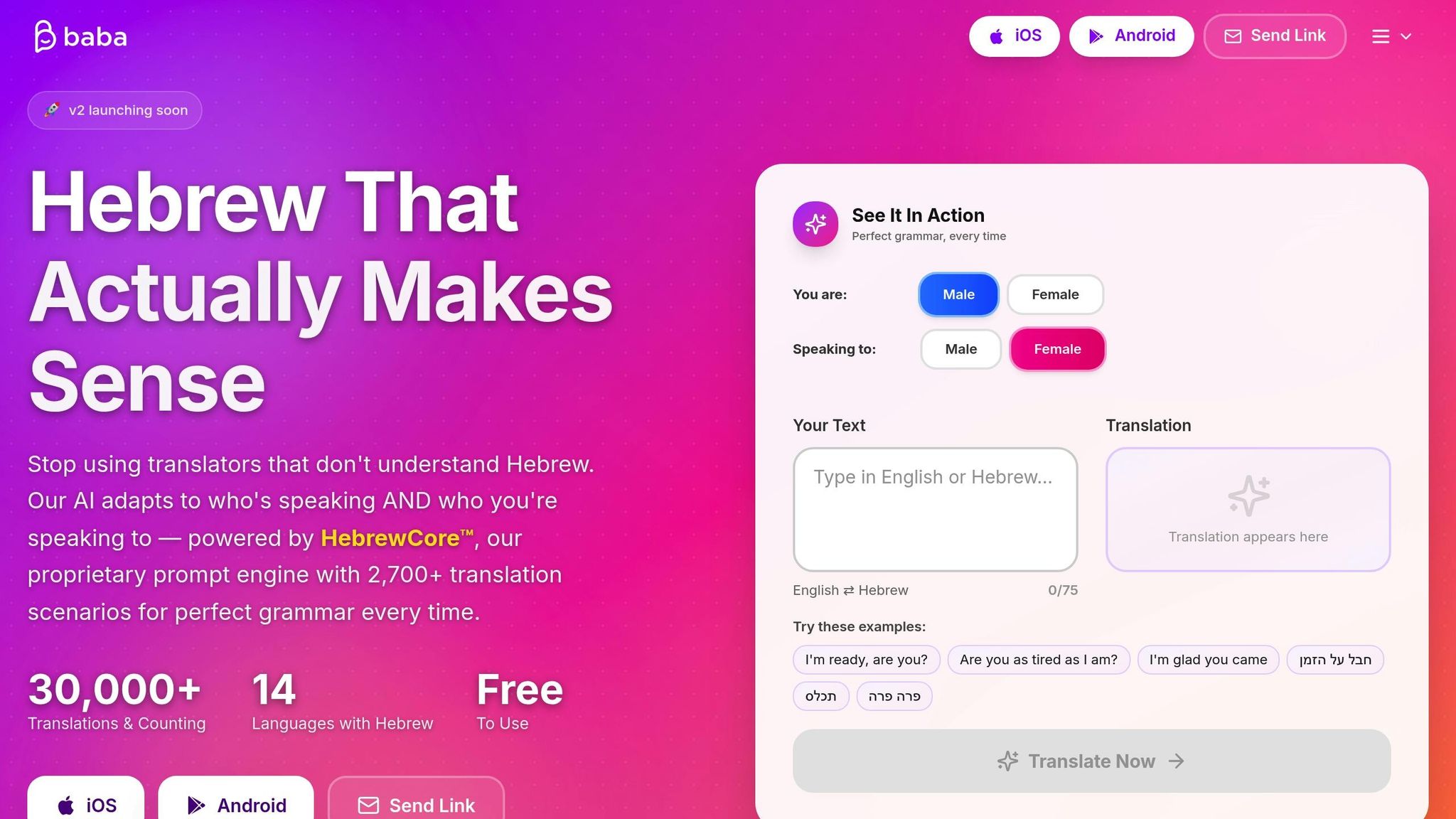
Looking for a smart tool to help you get started? Meet baba.
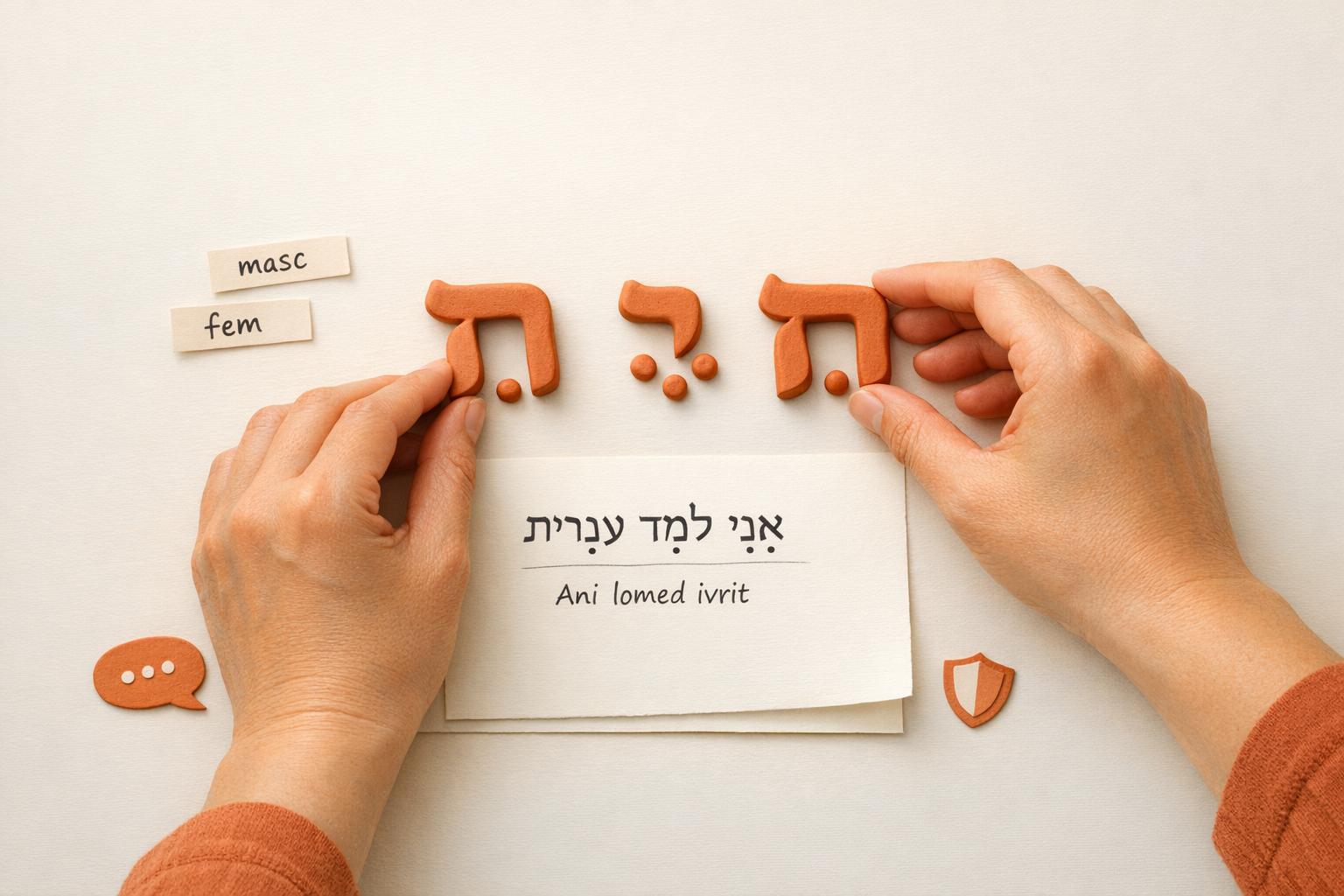
While professional legal translation requires specialized skills, baba provides a powerful first step for understanding Hebrew business communication. Its gender-aware technology and cultural insights make it perfect for quick contract reviews and everyday business correspondence.
Here’s why baba stands out:
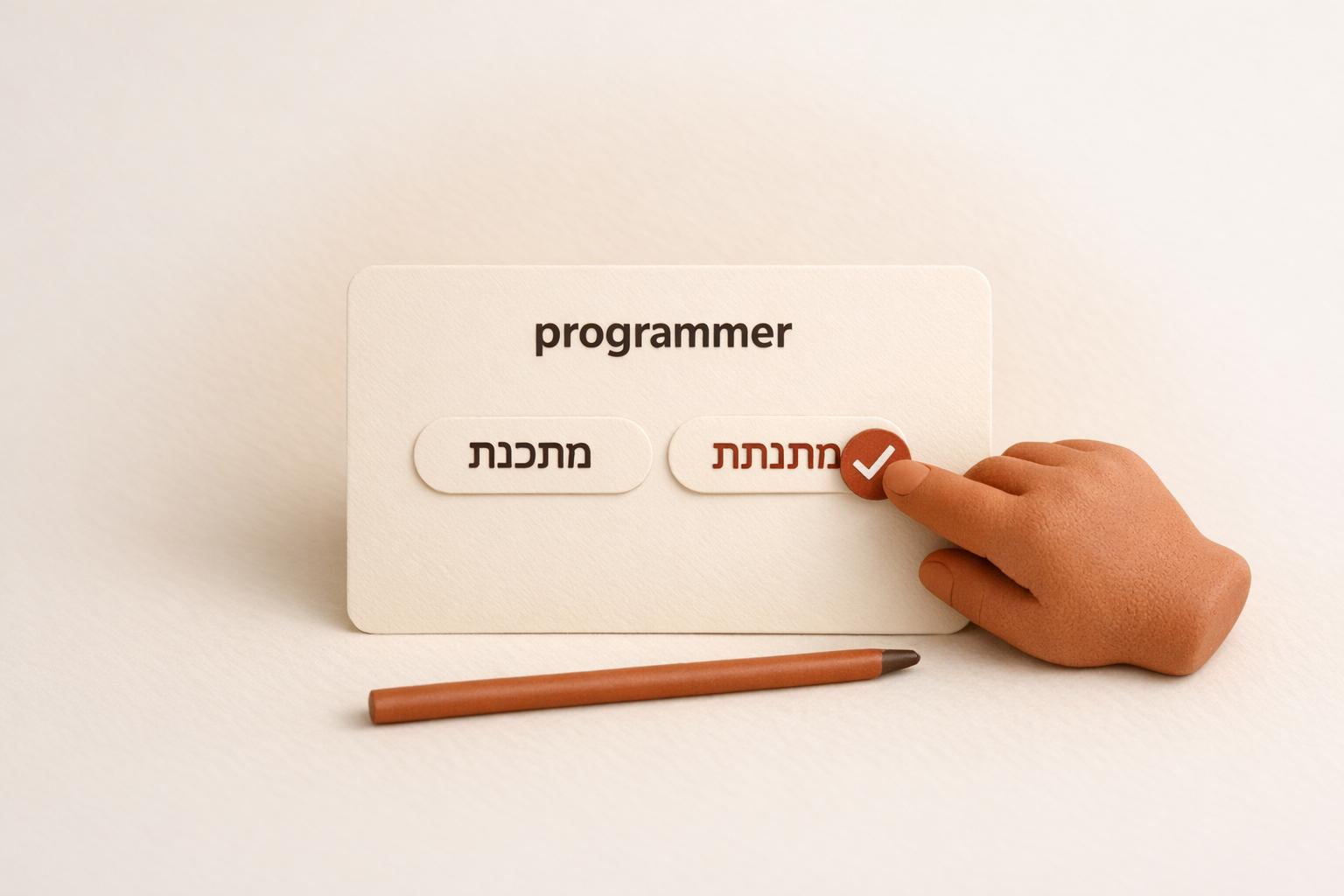
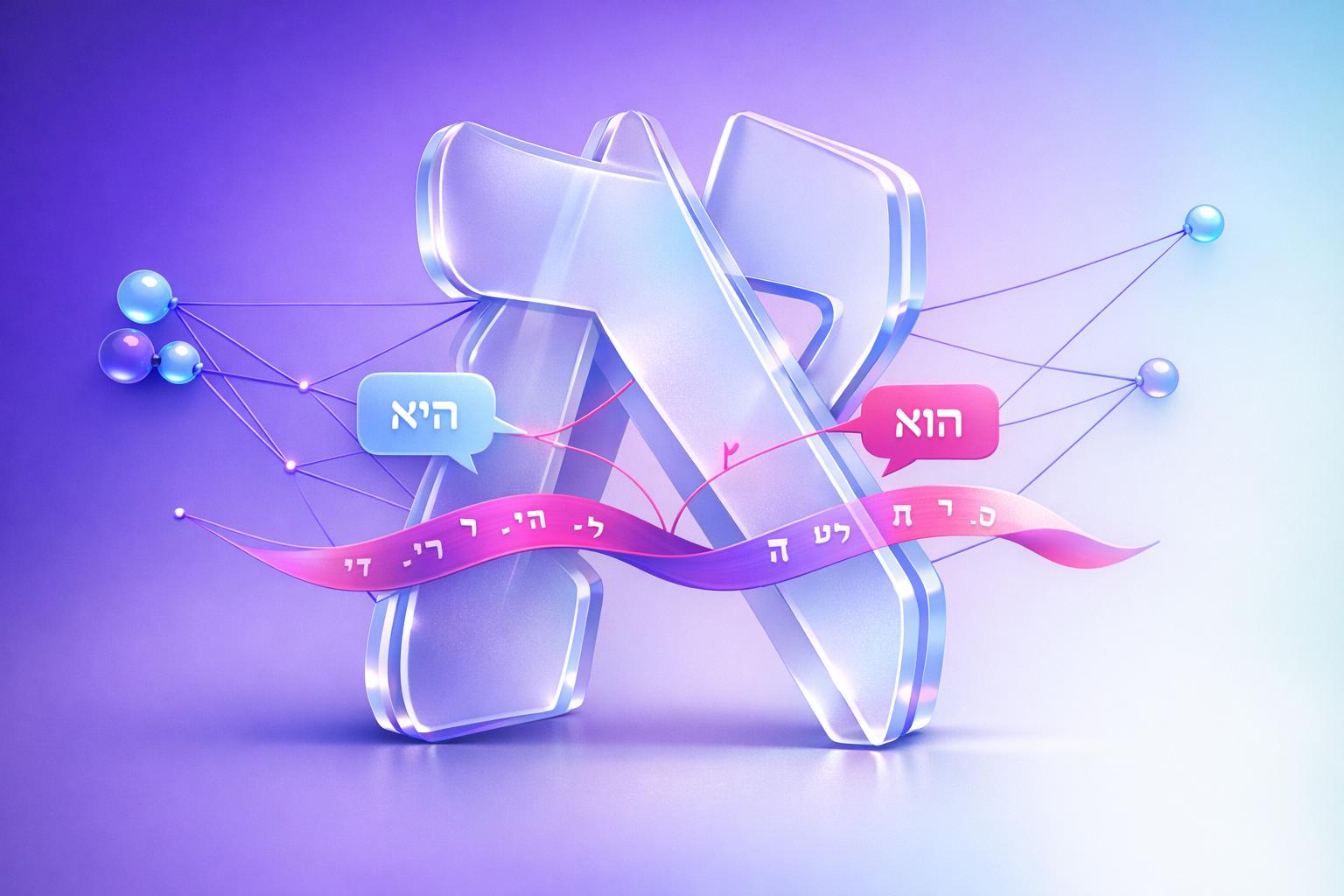
- Gender-aware technology: Hebrew can be tricky with its gendered language, but baba ensures your communication sounds polished and appropriate, whether addressing male or female counterparts.
- Modern Hebrew expertise: Israeli contracts often include contemporary slang and informal expressions. baba helps you grasp these nuances, giving you better context for negotiations or discussions.
- Versatility: Whether you’re reviewing a contract or preparing for a business meeting, baba offers the cultural and linguistic intelligence you need to navigate Hebrew effectively.
Available on iOS and Android, baba provides AI models tailored to your needs. From quick lookups to detailed clause analysis, baba keeps your information private - no login required, no data tracking.
Download baba today and experience Hebrew translation that goes beyond the basics. Whether you’re gearing up for negotiations or decoding business correspondence, baba delivers the depth and context that generic tools simply can’t match.
FAQs
What challenges does AI face when translating Hebrew contracts, and how do these affect accuracy?
AI faces significant hurdles when it comes to translating Hebrew contracts, largely due to the intricate nature of the language. Hebrew demands a deep understanding of elements like gender, plurality, and subtle cultural nuances - details that general AI tools often miss. On top of that, legal terminology introduces an additional challenge. In contracts, every word matters, and even minor errors can lead to major misinterpretations.
These issues often result in translations that lose context or fail to convey the intended meaning. For this reason, it’s crucial to rely on tools or services that emphasize precision and sensitivity to cultural details.
When is a hybrid approach to translating Hebrew contracts the best choice, and how does it balance speed and accuracy?
When it comes to translating Hebrew contracts, a hybrid approach works best. Combining the speed of AI with the expertise of human translators ensures the process is both efficient and accurate. Legal language, cultural nuances, and subtle contextual details often require a level of understanding that AI alone can't provide.
Using AI for the initial draft helps tackle repetitive tasks quickly, saving time. Then, human translators step in to fine-tune the text, ensuring it meets legal and cultural standards. This approach is particularly helpful for contracts that are time-sensitive, where both speed and precision are equally important.
Human translators bring a deep understanding of context, tone, and intent to Hebrew contracts - something AI tools often struggle to replicate. Hebrew’s gendered language and intricate legal terminology demand more than just a literal translation. They require careful interpretation to ensure the meaning is conveyed accurately.
AI-powered tools can be quick and efficient, but they often falter when faced with ambiguous phrases, idiomatic expressions, or the precise legal wording needed for compliance. Experienced human translators, particularly those familiar with legal documents, can tailor translations to align with cultural norms and legal requirements. This level of precision makes them the preferred choice for handling sensitive materials like contracts.
Frequently Asked Questions
How does Hebrew's gendered grammar cause problems in contract translation?
Hebrew assigns grammatical gender to verbs, adjectives, and nouns, so a single mistranslated gender agreement can change who bears an obligation or how a clause applies. In contracts, that kind of error can shift legal meaning in ways that are easy to miss on a quick read but costly in a dispute.
What Hebrew legal terms are hardest for AI to translate accurately?
Terms like שיפוי (indemnification), ערבות בנקאית (bank guarantee), and הפרת חוזה יסודית (fundamental breach of contract) don't have clean one-to-one English equivalents—they carry specific meaning within Israeli legal frameworks. AI tools often produce a literal word match that technically translates but misrepresents how the term functions in practice.
Can I use an AI translator to review a Hebrew contract before hiring a lawyer?
Yes, an AI translation gives you a fast structural overview so you can identify which clauses need closer attention before committing to a full legal review. Just treat it as a first-pass orientation rather than a final interpretation, especially for obligation, liability, or termination sections.
What should I look for in a Hebrew translator who handles legal documents?
Look for someone with both native-level Hebrew fluency and direct experience with Israeli contract law—ideally someone who has worked on merger agreements, joint ventures, or regulatory filings. Translators who flag ambiguous phrasing and include explanatory notes add the most value on high-stakes documents.
How do I keep terminology consistent across multiple Hebrew contracts?
The hybrid approach helps here: AI ensures uniform output for repeated clauses like force majeure or liability caps, while a human reviewer builds and maintains a glossary of approved terms across the document set. Without that coordination, different translators or sessions can produce inconsistent phrasing in related agreements.