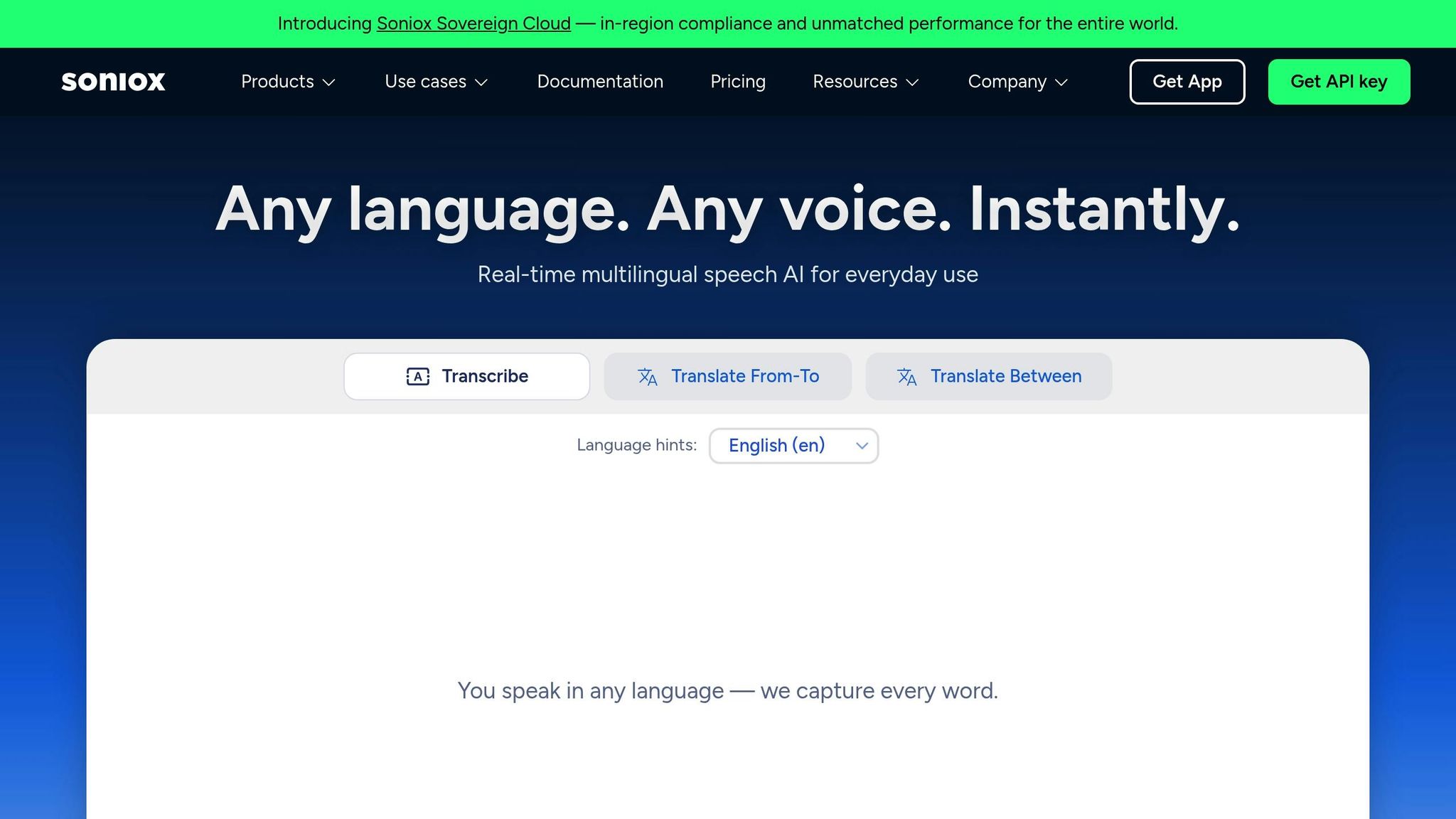
Soniox has carved a niche in Hebrew speech-to-text technology by delivering highly accurate transcriptions of real-world Hebrew conversations.
Accuracy in Hebrew Transcription (Word Error Rate)
The quality of speech-to-text systems is often measured using Word Error Rate (WER), which calculates transcription errors as a percentage of total words. A lower WER reflects higher accuracy. In a 2026 study analyzing YouTube audio across 60 languages, Soniox achieved an impressive 7.5% WER for Hebrew audio, showing its ability to produce cleaner transcriptions with minimal need for corrections [1].
Soniox also excels in addressing the unique challenges of Hebrew speech. It handles a variety of accents, accurately transcribes mixed-language input through fluent code-switching, and effectively processes overlapping speech [1]. This capability ensures precise transcription, even in complex scenarios, making it a standout choice for Hebrew language processing.
Expertise in Hebrew Linguistics and Industry-Specific Terms
Beyond its transcription accuracy, Soniox sets itself apart by integrating domain-specific intelligence tailored to Hebrew. It recognizes Hebrew-specific acronyms and terminology commonly used in industries like healthcare and finance, ensuring specialized vocabulary is captured correctly [1]. Features such as natural code-switching, speaker separation, and boundary detection make it easier to manage multi-speaker conversations.
For those working with Hebrew audio - whether in customer service, legal settings, or media production - Soniox’s combination of low error rates and linguistic precision means less time spent fixing errors and more time focusing on the actual content.
Verbit is a Hebrew speech-to-text provider, but detailed insights into its performance and technical features are scarce. Unlike some competitors that share benchmarks and case studies, Verbit's lack of transparency leaves potential users with unanswered questions, often requiring direct communication for clarity.
Real-time Capabilities
Real-time transcription is essential for events like meetings, classes, and live broadcasts. However, Verbit does not provide specific benchmarks for its Hebrew transcription performance in real-time scenarios. Without this data, it's hard to assess how effectively the platform handles live transcription needs. This gap in information makes it challenging to compare Verbit's capabilities with other providers in the market.
For enterprise users, integration with existing workflows and tools is a critical factor when choosing a speech-to-text solution. Many providers in the industry have established partnerships with platforms like Zoom or offer detailed API documentation to streamline adoption. Verbit, however, has not disclosed much about its integration capabilities, supported platforms, or official partnerships. Organizations interested in using Verbit should reach out directly to understand how it might fit within their systems.
Specialization in Hebrew Linguistics and Cultural Nuances
Hebrew is a complex language for speech recognition due to its unique phonetics, regional dialects, and contextual subtleties. Accurate transcription requires more than basic language support - it demands an in-depth understanding of how Hebrew is used in different settings. While some providers refine their systems to address Hebrew's specific challenges, Verbit has not shared how it handles these linguistic intricacies. Without this information, it's unclear whether Verbit can deliver the level of accuracy needed for nuanced Hebrew transcription, particularly in specialized or culturally specific contexts.
sbb-itb-7e51dcc
DeepHebrew AI offers a Hebrew speech-to-text service, but it provides minimal information about its performance. This lack of detail stands out when compared to the more thorough disclosures from other providers.
Accuracy in Hebrew Transcription (Word Error Rate)
DeepHebrew AI does not share any Word Error Rate (WER) benchmarks, making it difficult to gauge how accurate its transcriptions are.
Real-Time Capabilities
While the service claims to support real-time transcription, it does not provide any specifics about latency or processing speed, leaving users uncertain about its performance in live scenarios.
Details about integration options, such as APIs or SDKs, are entirely absent. This makes it unclear whether the service can be easily incorporated into other platforms or workflows.
Specialization in Hebrew Linguistics and Cultural Nuances
The platform does not explain how it handles Hebrew-specific challenges, such as gender agreement or verb conjugations, which are critical for accurate transcription in the language.
The absence of technical details and performance metrics makes it challenging to evaluate DeepHebrew AI's capabilities. These gaps highlight the importance of comparing it with other Hebrew speech-to-text solutions that provide more transparency.
Speechly Hebrew rounds out our list, though information about its capabilities is scarce. Like many startups tackling Hebrew, it faces the unique challenges of the language’s intricate structure. However, public data about its progress and features is minimal.
Accuracy in Hebrew Transcription (Word Error Rate)
There’s no available data on its performance metrics, such as word error rate.
Real-Time Capabilities
Details about real-time transcription, such as latency or processing speed, are not mentioned in any public documentation.
Integration Options
Information on integration options like APIs or SDKs is absent.
Specialization in Hebrew Linguistics
There’s no information on how Speechly Hebrew addresses the specific complexities of Hebrew, such as gendered language, verb conjugations, slang, or regional dialects.
These missing details make it difficult to evaluate how well Speechly Hebrew could meet integration needs, leaving its capabilities open to interpretation as we move into feature comparisons.
Feature Comparison
When evaluating five Hebrew speech-to-text startups, one thing stands out: transparency around pricing and technical performance is all over the map. Of the group, Soniox is the only company to openly share its pricing. They charge $0.10 per hour for asynchronous transcription (file uploads) and $0.12 per hour for real-time streaming transcription in standard scenarios [3]. For more advanced needs - like translation, custom context, or more granular control - the cost depends on token usage [3]. This pricing approach caters to a wide audience, from individual developers using the API to larger businesses needing scalable solutions.
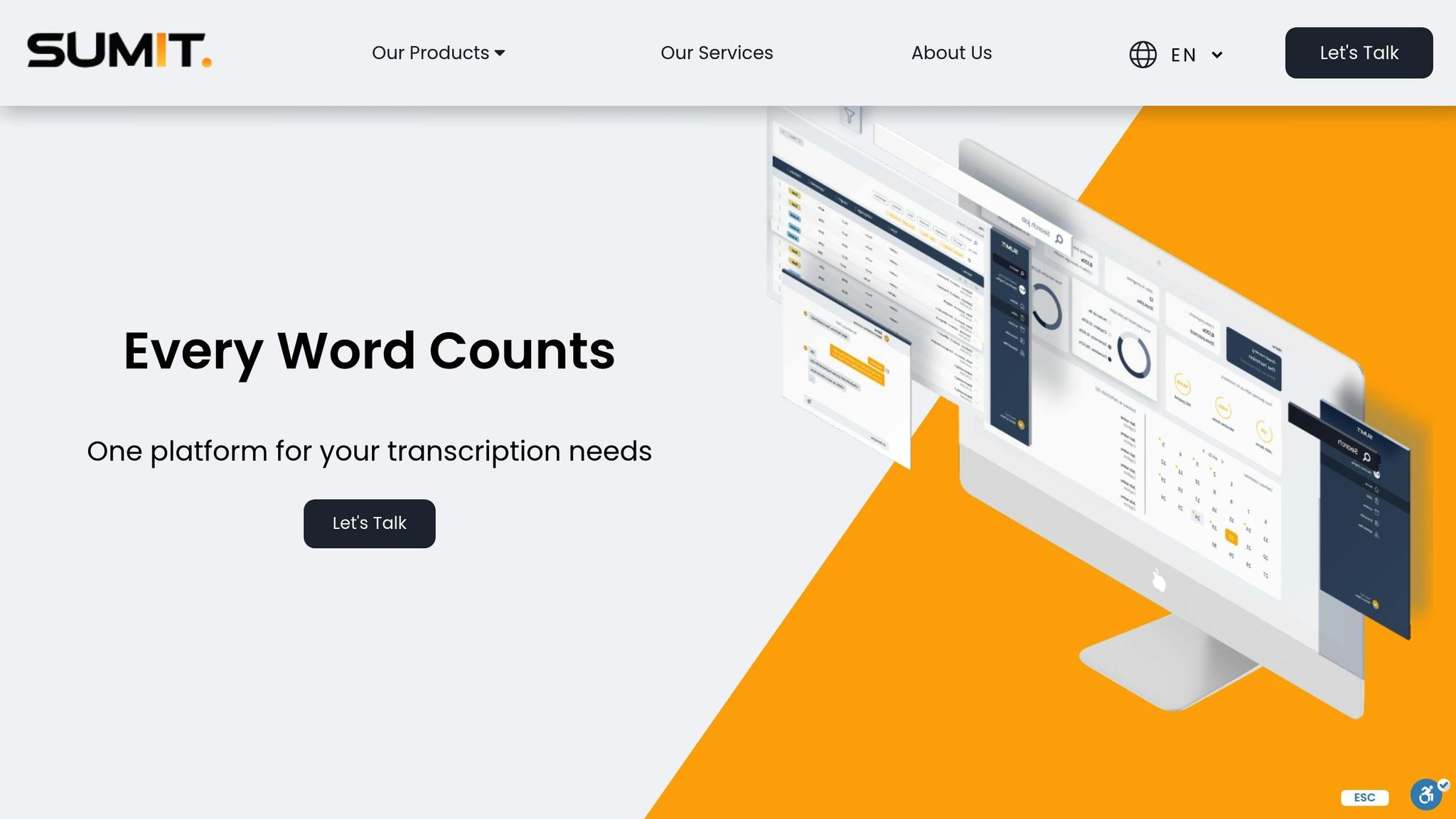
For the other four companies - Sumit-AI, Verbit, DeepHebrew AI, and Speechly Hebrew - pricing details are not publicly available. Without this information, it’s tough for potential users to evaluate how well these platforms might handle specific requirements like performance, real-time processing, or integration capabilities.
Although all these startups recognize the complexities of Hebrew's unique structure, only Soniox provides clear documentation about its API compatibility across major platforms like iOS, Android, and web. This level of transparency highlights the early-stage nature of the Hebrew speech-to-text market.
Conclusion
Hebrew speech-to-text technology is making strides, with startups tackling the unique challenges of the Hebrew language through a variety of approaches. Whether it's enterprise-level accuracy from Sumit-AI, transparent pricing and detailed API documentation from Soniox, human oversight integration from Verbit, contextual understanding from DeepHebrew AI, or real-time voice interfaces from Speechly Hebrew, each company brings something distinct to the table. This range of strategies reflects how the market is addressing Hebrew's linguistic complexities.
These advancements are pushing Hebrew AI beyond simple word recognition toward a deeper understanding of the language. The technology is evolving to handle everything from Modern Hebrew used in formal business settings to casual, conversational speech. Developers are working on solutions that can better navigate homonyms, gender agreement, and even challenging acoustic conditions - key hurdles for Hebrew speech recognition.
As highlighted, each company takes a unique approach to overcome Hebrew's specific challenges. However, the industry still faces hurdles, particularly when it comes to standardized benchmarks and clear performance data. As the market matures, more transparency and consistency in pricing and performance metrics will likely emerge, making it easier for businesses and developers to select the right tools.
Whether you're creating voice assistants, transcribing meetings, or building accessibility tools, these startups are at the forefront of Hebrew speech-to-text innovation. Their focus on refining Hebrew-specific solutions signals a bright future for this growing sector.
FAQs
What are the key challenges for Hebrew speech-to-text technology, and how are startups solving them?
Hebrew speech-to-text technology comes with its own set of hurdles, largely due to the language's intricate structure. A key challenge lies in the scarcity of high-quality speech data and essential linguistic tools, such as annotated datasets and pronunciation dictionaries. On top of that, Hebrew's unique root-and-pattern system and heavy use of affixes create a much larger vocabulary, making it tougher for systems to accurately identify all the possible word variations.
To address these issues, startups are stepping up with creative solutions. They're using crowdsourcing to gather larger, more diverse datasets, broadening the scope of available resources. At the same time, they're crafting advanced automatic speech recognition (ASR) models specifically designed to handle Hebrew's linguistic complexities, delivering more precise and dependable results for users.
How does unclear pricing from Hebrew speech-to-text startups affect users?
When pricing lacks transparency, it creates unnecessary challenges for users trying to make informed decisions. Without clear pricing, comparing services becomes tricky, evaluating value for money feels like guesswork, and planning budgets turns into a frustrating ordeal. For individuals or businesses with tight financial limits, this uncertainty can lead to hesitation and even distrust.
On the flip side, clear and upfront pricing fosters trust. It reassures users by letting them know exactly what to expect before they commit to a service.
Why is real-time transcription important for Hebrew speech-to-text solutions, and which startups specialize in this feature?
Real-time transcription plays a key role in situations where quick access to spoken content is a must - think live meetings, webinars, or customer support calls. It ensures participants can keep up with conversations, jot down notes, or respond right away without losing track of important details.
In the world of Hebrew speech-to-text, several startups are pushing boundaries to provide real-time transcription solutions that prioritize both precision and speed, making them invaluable for these high-pressure scenarios.
Frequently Asked Questions
How does Hebrew's gendered grammar affect speech-to-text accuracy?
Hebrew requires every noun, verb, and adjective to agree in gender, which means a transcription engine has to understand grammatical context—not just sounds—to output the right word form. Systems trained on generic multilingual data often get this wrong, producing transcriptions that need heavy manual correction before they're usable.
Can Hebrew speech-to-text tools handle mixed Hebrew and English speech?
Code-switching—flipping between Hebrew and English mid-sentence—is extremely common in Israeli professional and casual settings. Soniox explicitly lists fluent code-switching as a supported feature, though most other startups on this list don't publicly document how well they handle it.
What is a good Word Error Rate for Hebrew transcription?
Word Error Rate (WER) measures the percentage of words a system gets wrong, so lower is better. Soniox's published 7.5% WER for Hebrew audio is considered strong for a language this complex, but most providers on this list haven't released comparable benchmarks, making direct comparison difficult.
Do any of these tools work directly inside Zoom or other meeting platforms?
Sumit-AI has a formal partnership with Zoom that embeds Hebrew transcription and meeting summaries directly into the Zoom AI Companion, so users don't need a separate app. The other startups reviewed here haven't publicly confirmed equivalent platform integrations.
Is Hebrew speech-to-text the same as Hebrew translation, or are they different tools?
They solve different problems: speech-to-text converts spoken Hebrew audio into written Hebrew text, while translation converts meaning between Hebrew and another language like English. For workflows that need both—say, transcribing an Israeli meeting and then sharing it in English—you'd typically need separate, complementary tools for each step.